The artist Jean Paul Lemieux (1904–1990) would not have chosen to be born anywhere but in Quebec City, an enchanting old walled town, and he lamented the disappearance of its charm as modernization advanced. But he never grew tired of painting his city-muse and city-museum, where he was born and where he would die. He spent most of his life either in the city or not far away from it. At least thirty of the paintings he created after he returned permanently in 1937 showcase its beauty, while at the same time they bear witness to the patient evolution of his style, which is revealed when one compares January in Quebec (Janvier à Québec), 1965, painted in his later, classic era (1970–1990), with Corpus Christi, Quebec City (La Fête-Dieu à Québec), 1944, from his earlier, primitivist period (1940–1946).
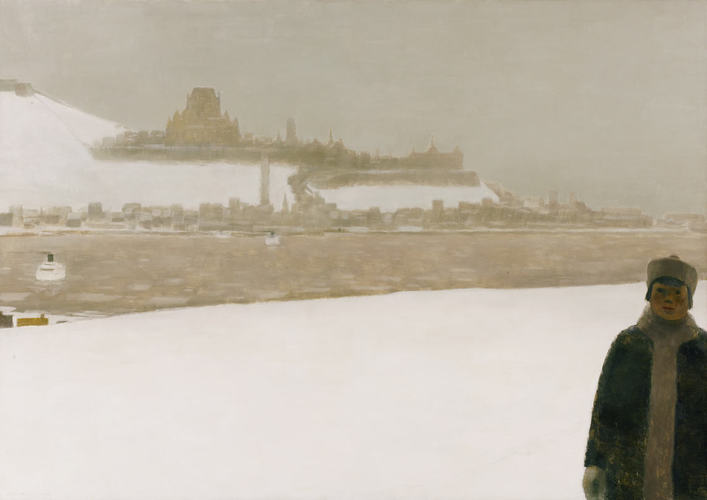
Jean Paul Lemieux, January in Quebec City (Janvier à Québec), 1965
Oil on canvas, 106.4 x 151.5 cm, Art Gallery of Ontario, Toronto
From the beginning of the twentieth century Montreal and Toronto were the most important centres in the rising artistic culture of Canada. When Lemieux decided to make his birthplace his permanent home and embarked there on a triple career as painter, teacher, and critic, he showed a remarkable spirit of independence. He was always in touch with the latest advances in painting and teaching as they were occurring in Montreal in the 1920s and 1930s, and was certainly aware that that city was at the heart of the Canadian art scene, as it had been since the middle of the nineteenth century. With the establishment of the Society of Canadian Artists in 1867, and the Art Association of Montreal (now the Montreal Museum of Fine Arts) in 1880, Montreal had definitively replaced Quebec City as the most important art centre in Canada.
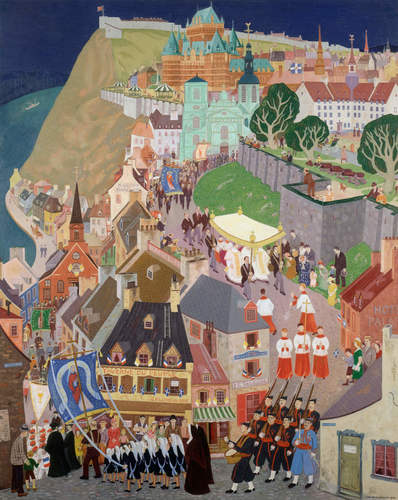
Jean Paul Lemieux, Corpus Christi, Quebec City (La Fête-Dieu à Québec), 1944
Oil on canvas, 152.7 x 122 cm, Musée national des beaux-arts du Québec, Quebec City
Quebec City was now more a centre of political than of cultural power. However, the creation of a school of fine arts in 1922 and the Musée de la province de Québec (now the Musée national des beaux-arts du Québec) in 1933 undoubtedly had an influence on Lemieux’s decision to settle there. Yet, a disheartening observation he made shortly after his arrival may convey some sense of the isolation experienced in the capital: “Exhibitions of paintings that tour the country never come to Quebec City, for the simple reason that there are no galleries with the necessary conditions of light, neutral background walls, etc. . . .. And so we miss out . . . on a lot of exhibitions that could educate us and awaken an interest in the beauty of art.”
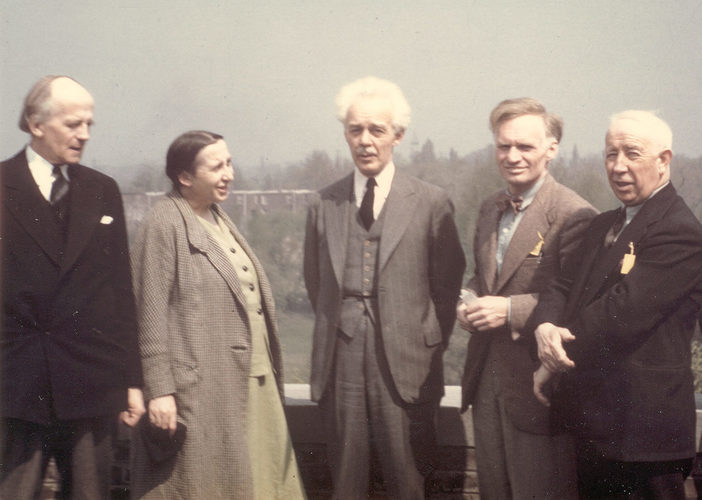
Leaders of the Federation of Canadian Artists at a meeting in Toronto in May 1942. From left to right: Arthur Lismer, Frances Loring, Lawren Harris, André Charles Biéler, and A.Y. Jackson.
In 1941, Lemieux’s friend André Biéler (1896–1989) invited the painter to participate in the Kingston meeting known as the Conference of Canadian Artists. Responding to Biéler, Lemieux described some of the problems faced by artists in Quebec. “For French-speaking Canadians there is a long list of issues that need to be addressed: the education of the public in matters of art, the preservation of traditional and folk art, exhibitions, propaganda, etc. This meeting will be extremely helpful, especially for those of us isolated in Quebec City and barely scraping a living behind our battlements.”
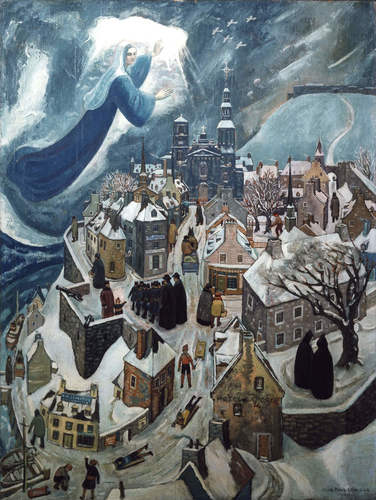
Jean Paul Lemieux, Our Lady Protecting Quebec City (Notre Dame protégeant Québec), 1942
Oil on canvas, 64 x 49.2 cm, Séminaire de Québec, Quebec City
Despite the fact that Lemieux was not present at the Kingston conference, he was asked to join the national committee that was set up to ensure that its recommendations were implemented. One of the proposals was to create a national art magazine, and in October 1943 Maritime Art, founded three years earlier, became Canadian Art. Between 1942 and 1947 Lemieux contributed numerous articles about the current art scene in Quebec. The pan-Canadian activism in which he was a participant would lead to the creation of the Canada Council for the Arts in 1957.
This Essay is excerpted from Jean Paul Lemieux: Life & Work by Michèle Grandbois.
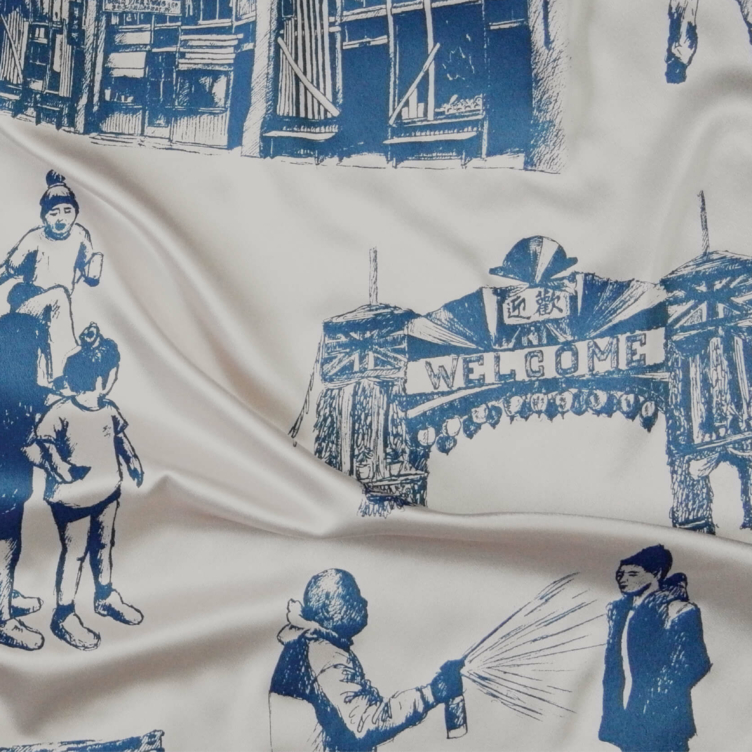 Karen Tam’s Autumn Tigers
Bridging Past and Present: Invisible Made Visible
By Imogene L. Lim, PhD
Karen Tam’s Autumn Tigers
Bridging Past and Present: Invisible Made Visible
By Imogene L. Lim, PhD
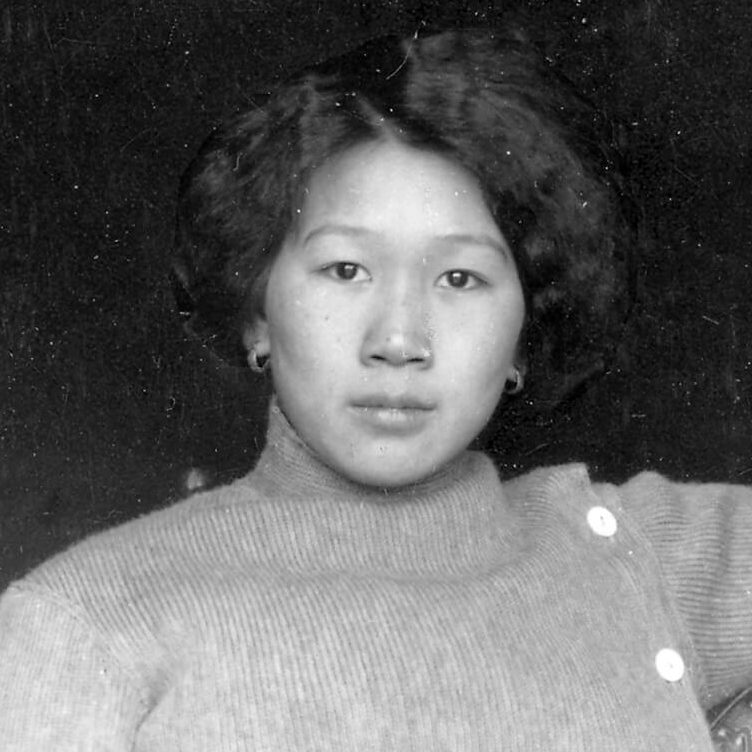 The Frontier Portraits of C.D. Hoy
A Chinese Canadian Photographer’s Tribute to His Community
By Faith Moosang
The Frontier Portraits of C.D. Hoy
A Chinese Canadian Photographer’s Tribute to His Community
By Faith Moosang
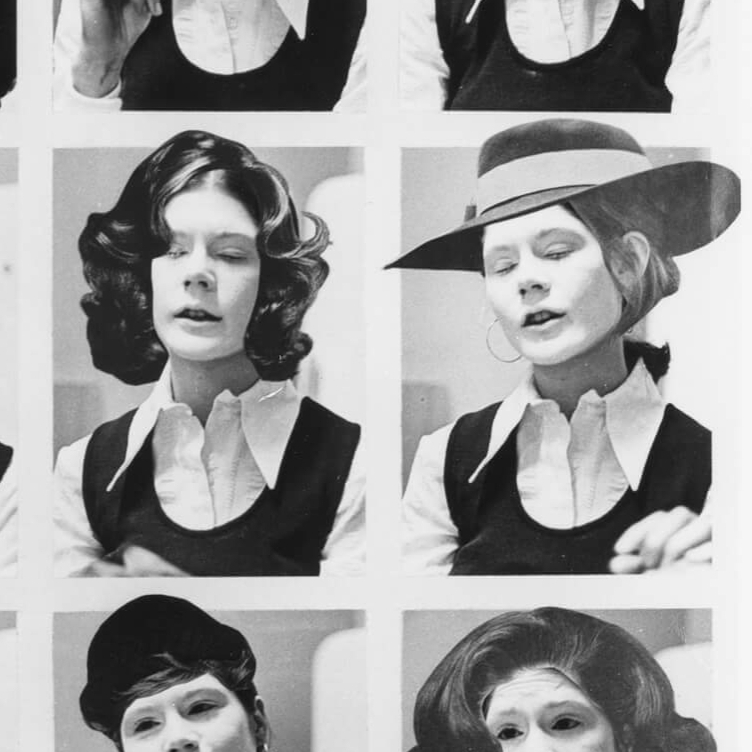 Interrogating Identity
Suzy Lake explores the role of photography in shaping how we understand and see ourselves
By Erin Silver
Interrogating Identity
Suzy Lake explores the role of photography in shaping how we understand and see ourselves
By Erin Silver
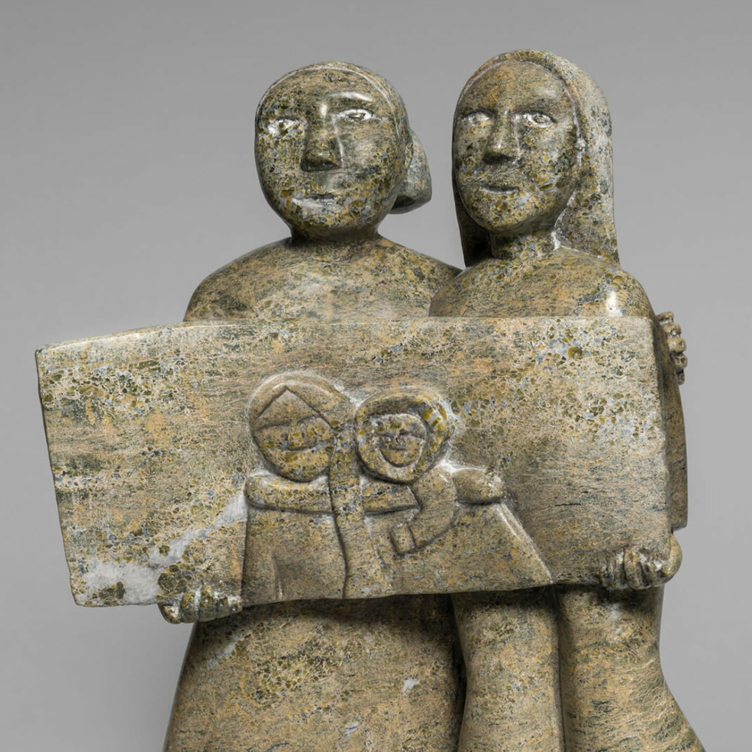 An Emboldened Artist
How Oviloo Tunnillie achieved rare international acclaim as an Inuit female sculptor
By Darlene Coward Wight
An Emboldened Artist
How Oviloo Tunnillie achieved rare international acclaim as an Inuit female sculptor
By Darlene Coward Wight
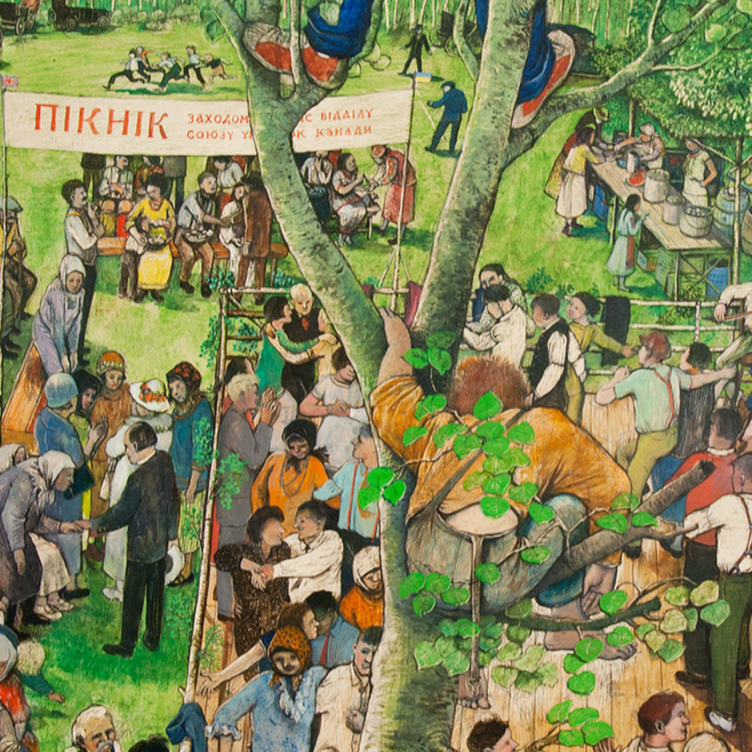 Painting the Cultural Mosaic
William Kurelek traversed the country in a quest to capture its diverse inhabitants
By Andrew Kear
Painting the Cultural Mosaic
William Kurelek traversed the country in a quest to capture its diverse inhabitants
By Andrew Kear
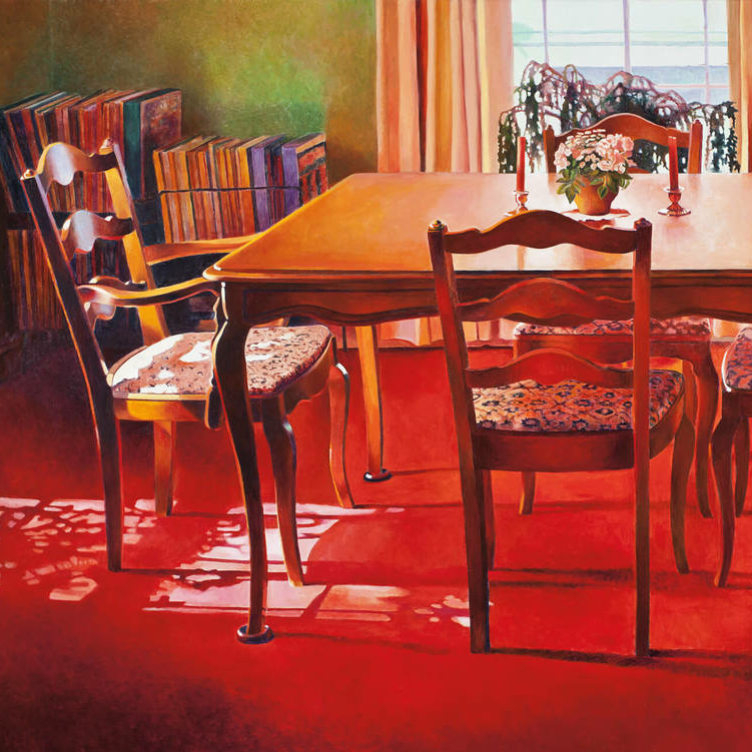 Domestic Discontent
Mary Pratt’s poetic scenes of home life are praised for their political edge
By Ray Cronin
Domestic Discontent
Mary Pratt’s poetic scenes of home life are praised for their political edge
By Ray Cronin
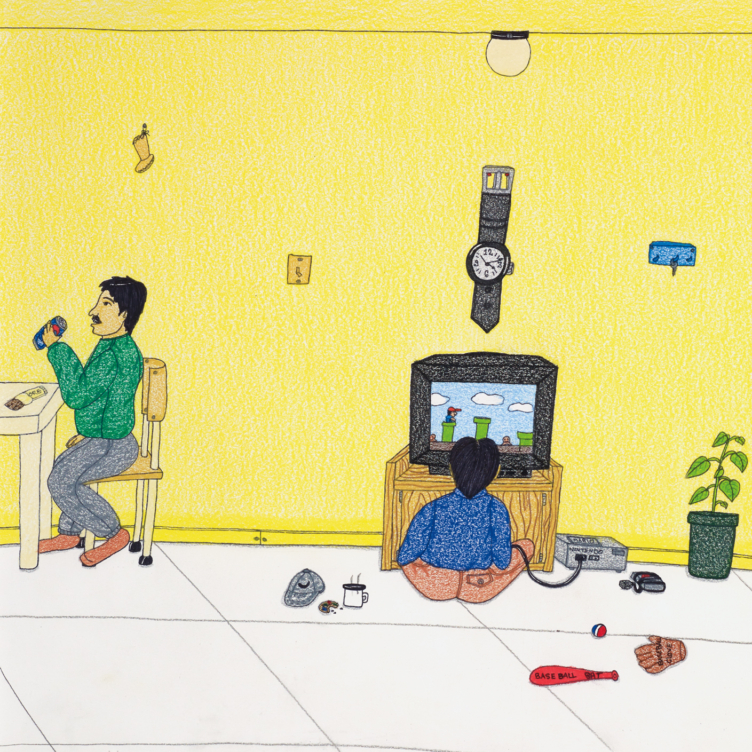 A New Vision of the North
Annie Pootoogook’s art offers unprecedented insights into the contemporary Arctic
By Nancy G. Campbell
A New Vision of the North
Annie Pootoogook’s art offers unprecedented insights into the contemporary Arctic
By Nancy G. Campbell
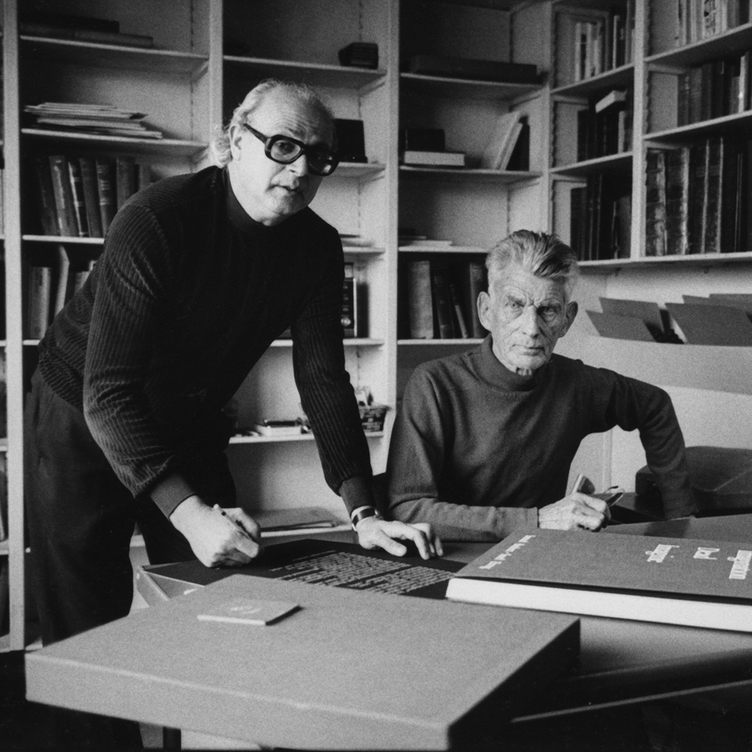 Meetings of Minds
Sorel Etrog found new ideas in collaborative work
By Alma Mikulinsky
Meetings of Minds
Sorel Etrog found new ideas in collaborative work
By Alma Mikulinsky
 Introducing Miss Chief
An excerpt from the ACI’s book “Revision and Resistance”
By Shirley Madill
Introducing Miss Chief
An excerpt from the ACI’s book “Revision and Resistance”
By Shirley Madill
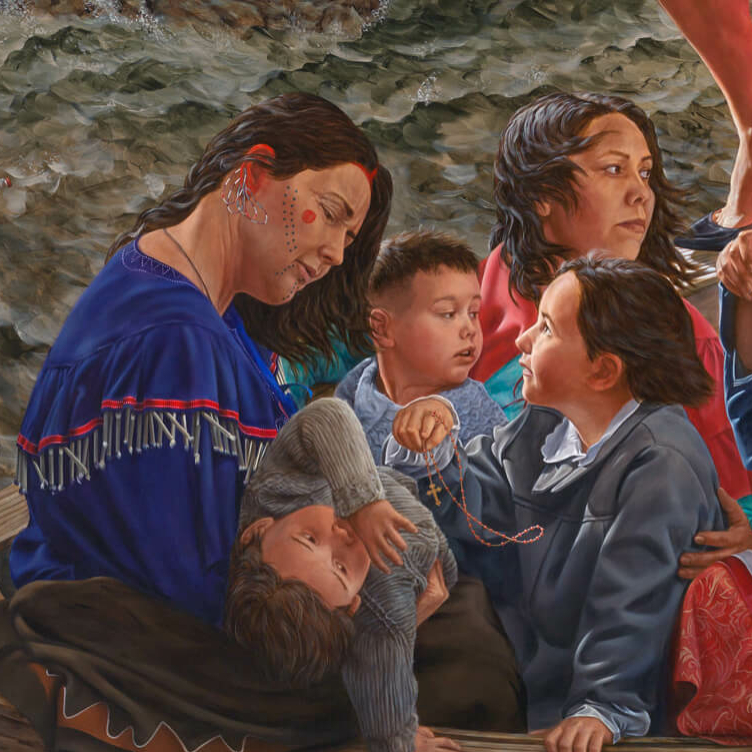 A Practice of Recovery
An excerpt from the ACI’s book “Revision and Resistance”
By Sasha Suda
A Practice of Recovery
An excerpt from the ACI’s book “Revision and Resistance”
By Sasha Suda
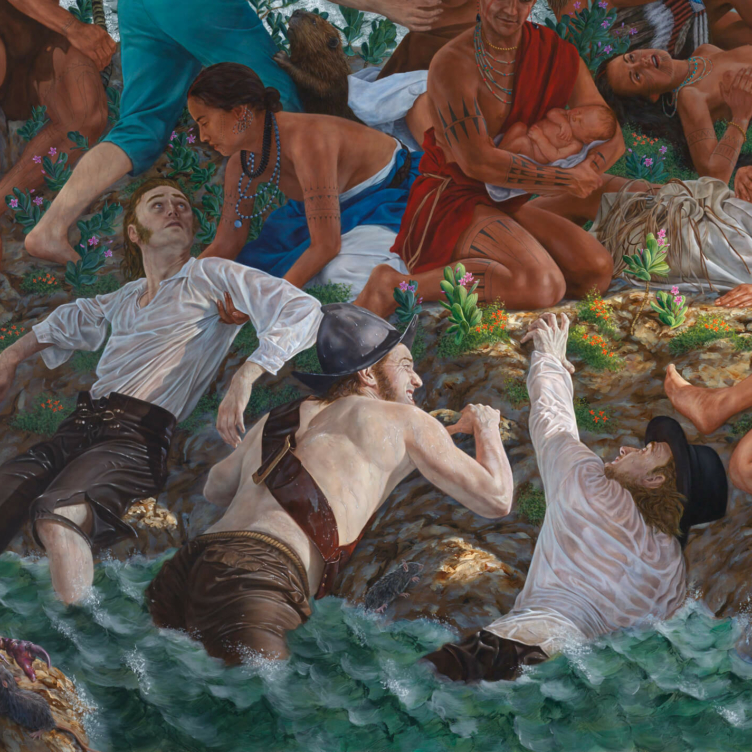 Decolonizing History Painting
An excerpt from the ACI’s book “Revision and Resistance”
By Ruth B. Phillips and Mark Salber Phillips
Decolonizing History Painting
An excerpt from the ACI’s book “Revision and Resistance”
By Ruth B. Phillips and Mark Salber Phillips
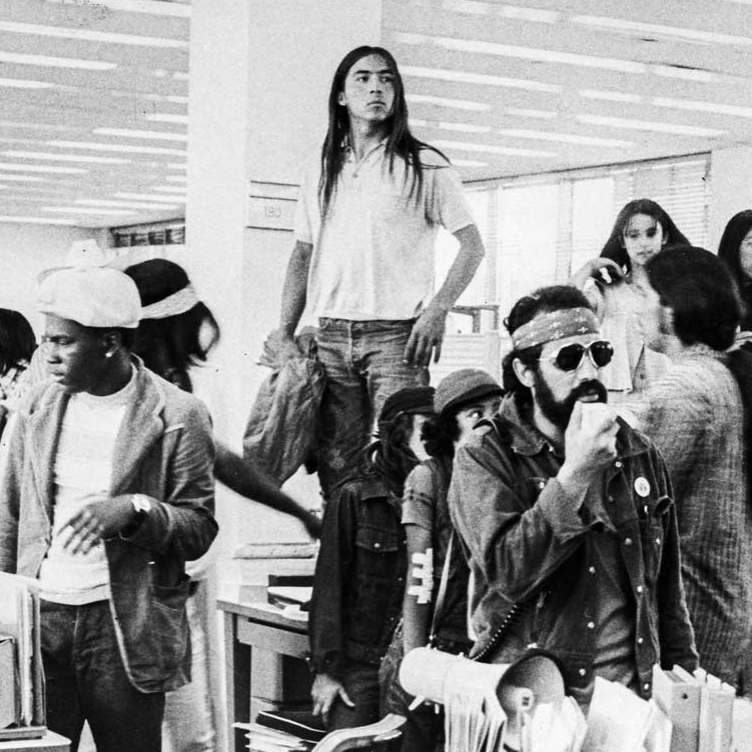 A Vision for the Future
An excerpt from the ACI’s book “Revision and Resistance”
By Nick Estes
A Vision for the Future
An excerpt from the ACI’s book “Revision and Resistance”
By Nick Estes
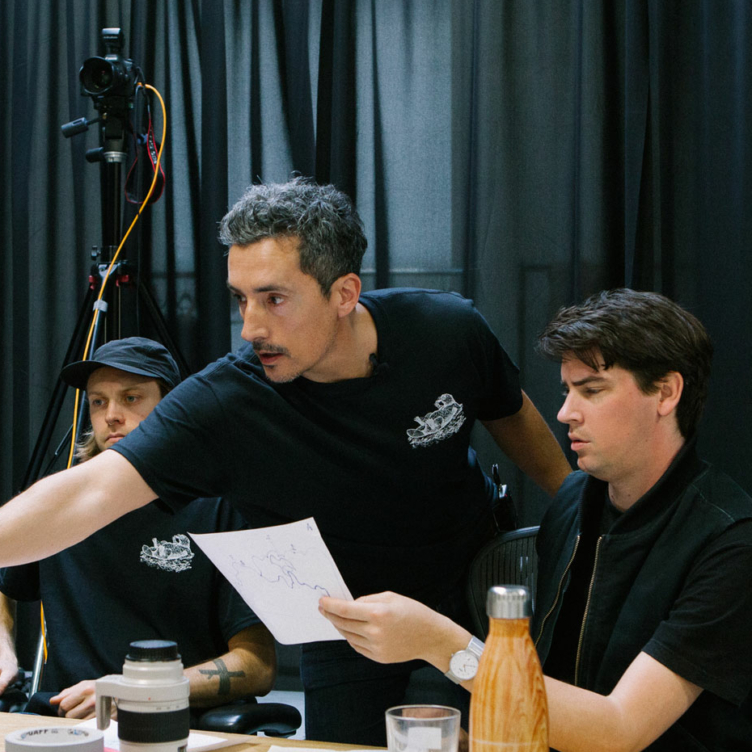 Inside Kent Monkman’s Studio
An excerpt from the ACI’s book “Revision and Resistance”
By Jami C. Powell
Inside Kent Monkman’s Studio
An excerpt from the ACI’s book “Revision and Resistance”
By Jami C. Powell
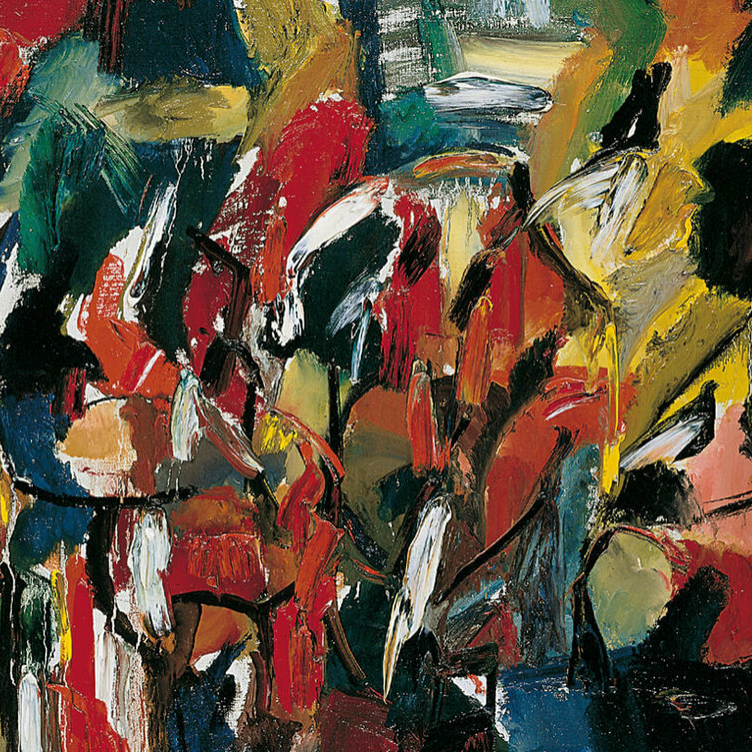 The Rule of Chance
Jean Paul Riopelle’s break with Automatism
By François-Marc Gagnon
The Rule of Chance
Jean Paul Riopelle’s break with Automatism
By François-Marc Gagnon
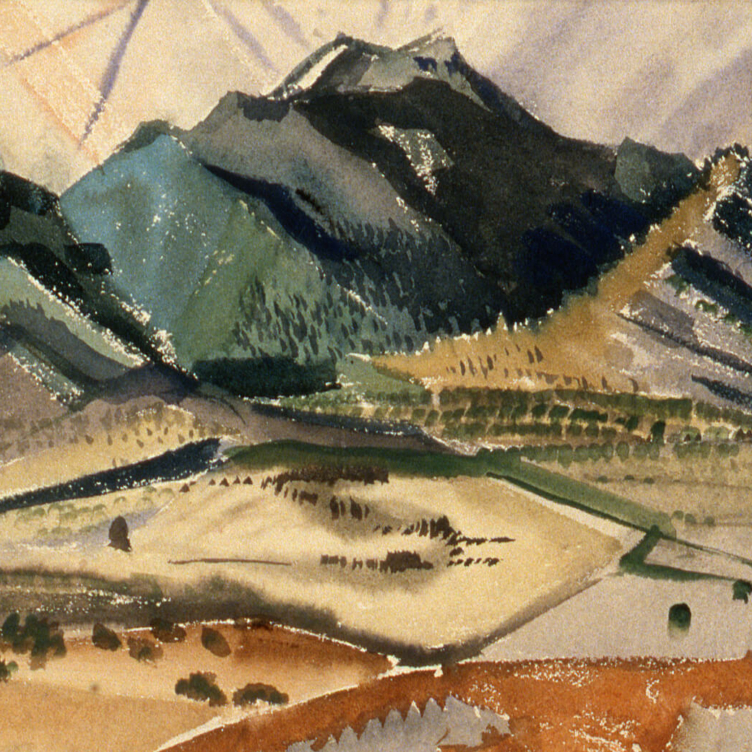 From Taos to New York
Agnes Martin and the currents of American Art
By Christopher Régimbal
From Taos to New York
Agnes Martin and the currents of American Art
By Christopher Régimbal
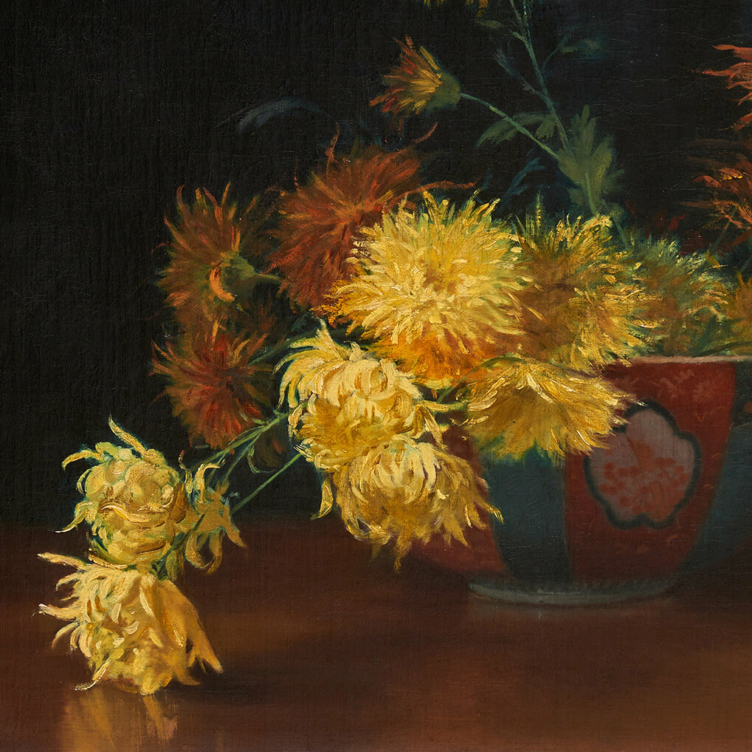 An Artist Blooms
Mary Hiester Reid’s floral aesthetics
By Andrea Terry
An Artist Blooms
Mary Hiester Reid’s floral aesthetics
By Andrea Terry
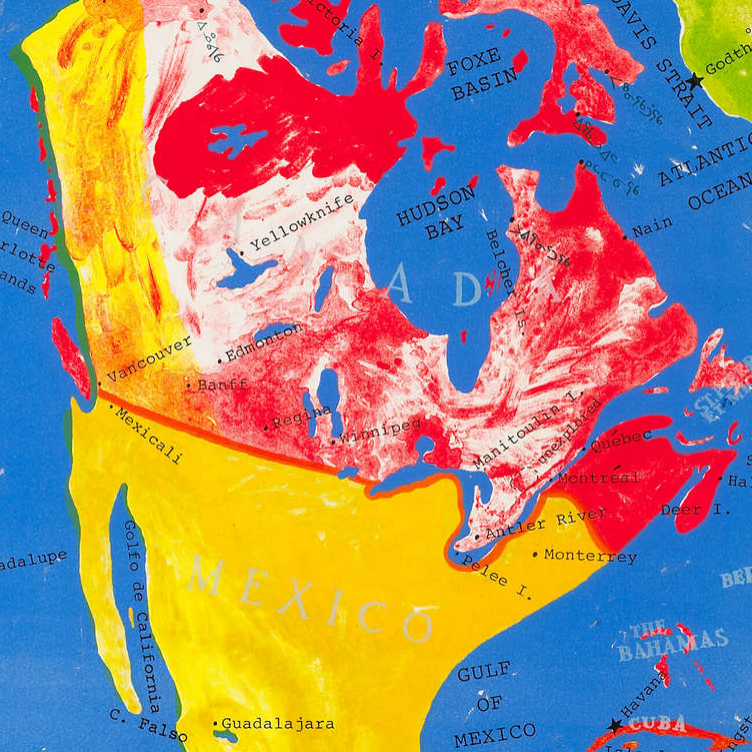 The Patriotic Painter
Greg Curnoe’s Canada
By Judith Rodger
The Patriotic Painter
Greg Curnoe’s Canada
By Judith Rodger
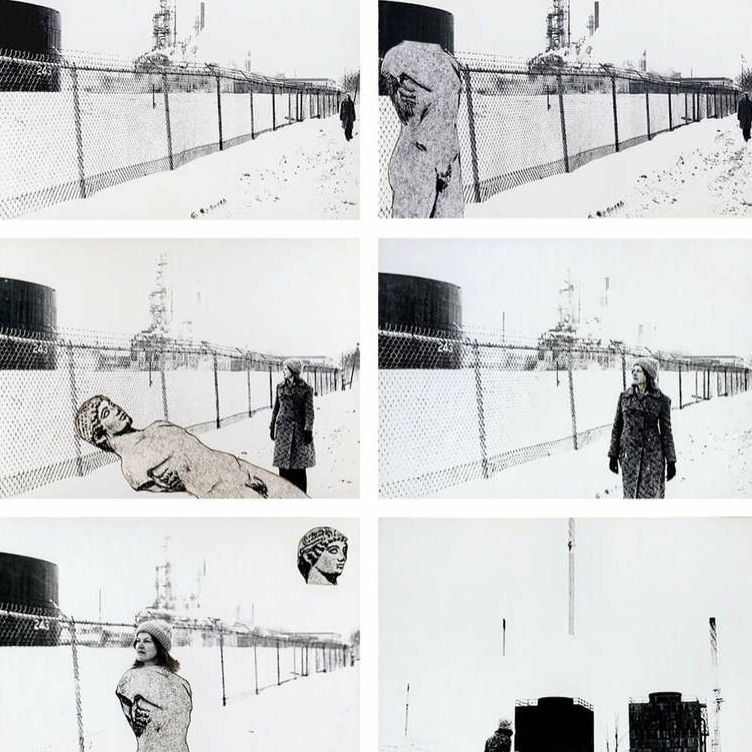 Walking, Stacking, Dancing
Françoise Sullivan’s conceptual 1970s
By Annie Gérin
Walking, Stacking, Dancing
Françoise Sullivan’s conceptual 1970s
By Annie Gérin
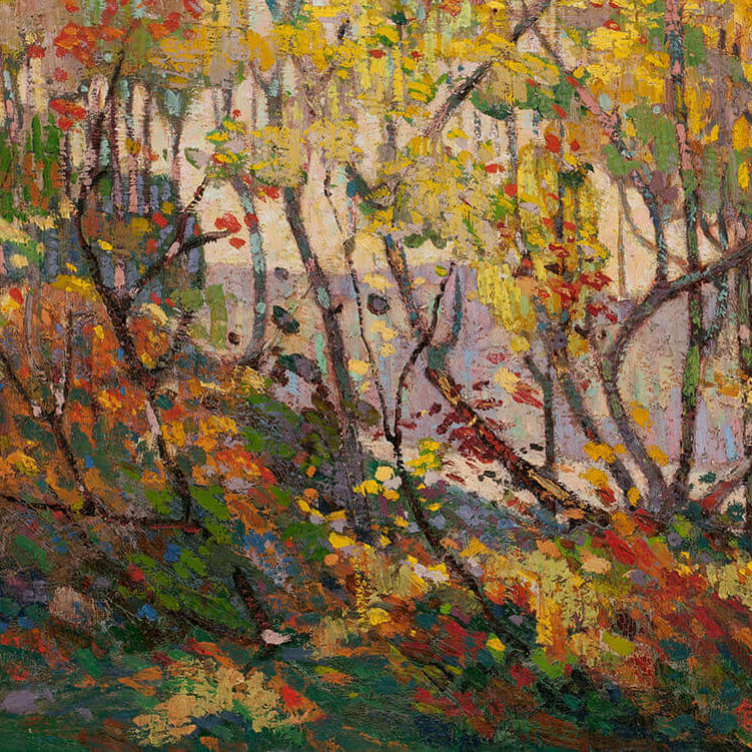 The Extraordinary North
Tom Thomson’s diary of landscape
By David P. Silcox
The Extraordinary North
Tom Thomson’s diary of landscape
By David P. Silcox
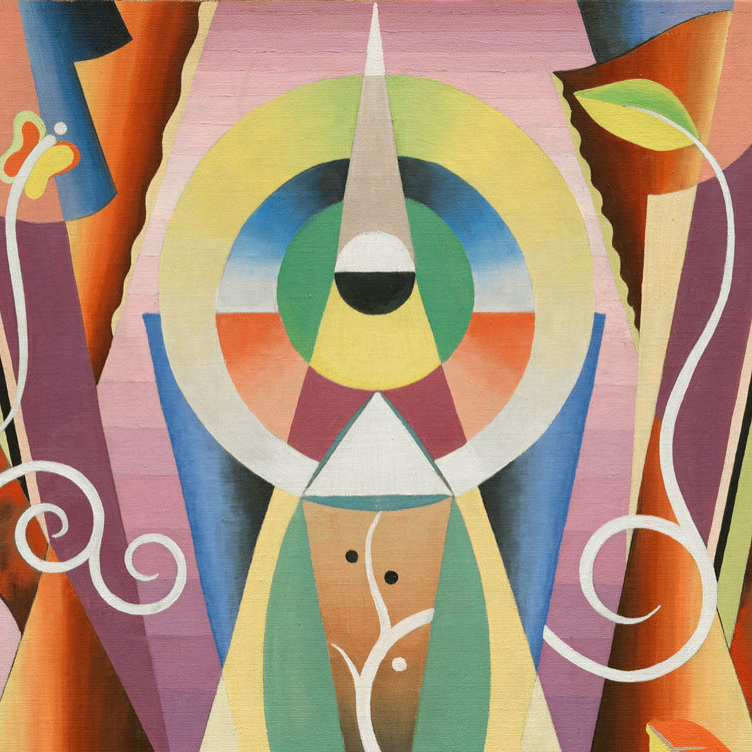 A Champion of Abstraction
Jock Macdonald sought a new expression in art
By Joyce Zemans
A Champion of Abstraction
Jock Macdonald sought a new expression in art
By Joyce Zemans