The abstract artist Agnes Martin (1912–2004) was associated with two distinct artist scenes during her career—first the Taos Moderns, and later the artists of New York City. The former was a group of self-described modern painters, which included Louis Ribak (1902–1979), Beatrice Mandelman (1912–1998), Clay Spohn (1898–1977), and Edward Corbett (1919–1971), who came to the remote New Mexico town from New York City and California in the 1950s. Taos had been a destination for artists since the 1890s and was well-known through the paintings of Georgia O’Keeffe (1887–1986) and the photographs of Ansel Adams (1902–1984). While the Taos Moderns was not an official group, its members were inspired by Abstract Expressionism and were connected to the larger movement of postwar American abstraction: California painter Richard Diebenkorn (1922–1993) showed several times in Taos, and Mark Rothko (1903–1970), Ad Reinhardt (1913–1967), and Clyfford Still (1904–1980) all visited from New York. Reinhardt is the common figure between Martin’s world in Taos in the 1950s and her life in New York in the 1960s. The two met in 1951, and they later shared a gallerist in Betty Parsons (1900–1982). During this period, Martin painted in an abstract, biomorphic style, as can be seen in the 1954 painting The Bluebird.
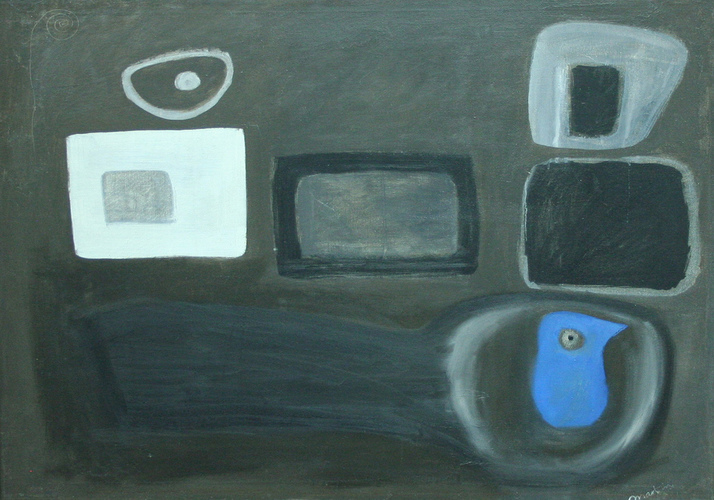
Oil on canvas, 71.4 x 101.6 cm, Roswell Museum and Art Center, New Mexico. © Agnes Martin / SOCAN (2019)
In 1957, Martin moved to New York and specifically to Coenties Slip, where a small enclave of artists had taken up residence in abandoned ship lofts on the eastern shore of Lower Manhattan. Like the Taos Moderns, the artists of the Slip, including Robert Indiana (1928–2018), Lenore Tawney (1907–2007), Ellsworth Kelly (1923–2015), James Rosenquist (1933–2017), and Jack Youngerman (b.1926), were not unified by a single style but by a shared sensibility and geographic proximity. Collectively, the artist scene represented a response to Abstract Expressionism; Martin can be understood as a transitional figure between the generation of Jackson Pollock (1912–1956) and Willem de Kooning (1904–1997) and the formalists—Minimalists, practitioners of Optical art (popularly known as Op art) and of Hard Edge—who followed.
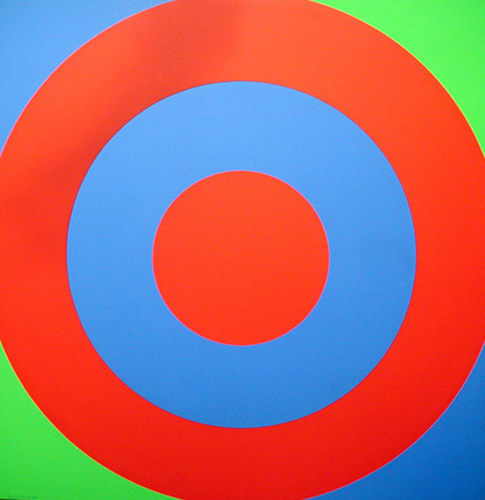
Acrylic latex on canvas, 177.8 x 177.8 cm, Yale University Art Gallery, New Haven, Connecticut
In New York, Martin developed her signature grid style. She was included in group exhibitions in the 1960s that placed her in the various painting camps. In 1965, the Museum of Modern Art categorized her with Op art, which was a movement of artists—including Canada’s Claude Tousignant (b.1932)—who explored ideas of perception through abstraction. A 1966 exhibition at the Solomon R. Guggenheim Museum characterized Martin’s The City, 1966, along with Kelly’s Blue, Green, Yellow, Orange, Red, 1966, as examples of Hard Edge painting. Curator Lawrence Alloway argued the term opposed the geometric abstraction of Op art and was “a way of stressing the wholistic [sic] properties of both the big asymmetrical shapes” of Kelly and the “symmetrical layouts” of Martin.
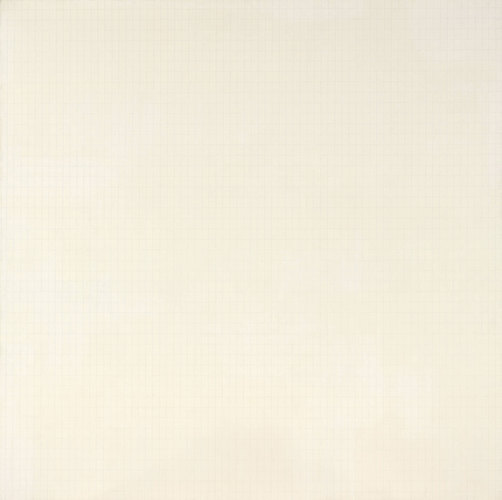
Acrylic and graphite on canvas, 182.9 x 182.9 cm, Cleveland Museum of Art, Ohio. © Agnes Martin / SOCAN (2019)
That same year, Martin’s Leaves, 1966, was exhibited alongside Minimalist works by Robert Morris (b.1931), Carl Andre (b.1935), and Sol LeWitt (1928–2007) at the Dwan Gallery in Los Angeles. The exhibition included monotone and grid-based paintings and sculptures that were stylistically similar to Martin’s work, but the artists could not agree on a statement or even a title that encapsulated their movement. Martin later stated, “They were all minimalists, and they asked me to show with them. But that was before the word was invented. . . and then when they started calling them minimalists they called me a minimalist, too.”
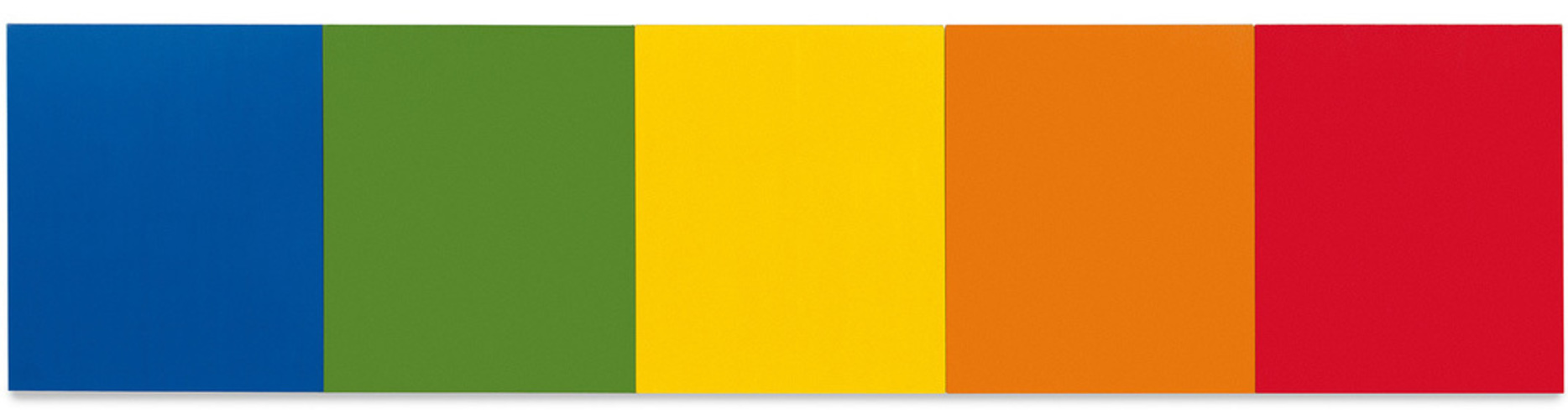
Oil on canvas, five panels, 152.4 x 609.6 cm overall, Solomon R. Guggenheim Museum, New York
Martin considered herself to be a member of the Abstract Expressionist movement, which included many immigrants to the United States, such as de Kooning, Rothko, and Hans Hofmann (1880–1966). Her paintings lacked the expressive gestures and drips of Pollock’s monumental canvases, for example, or the vivid merger of abstraction and representation of de Kooning’s Woman series. Yet Martin saw her paintings as part of the same emotional trajectory: she told the New Yorker that the Abstract Expressionists “dealt directly with those subtle emotions of happiness that I’m talking about.”
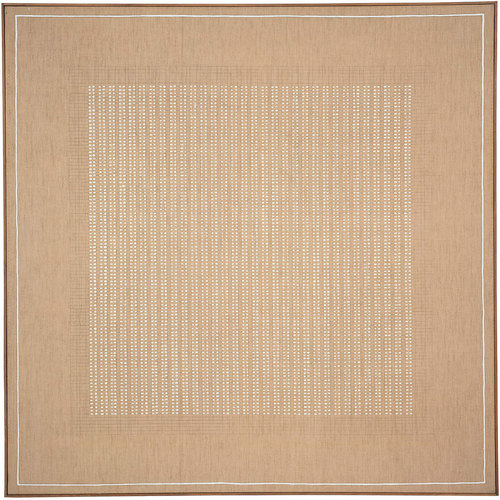
Oil and graphite on canvas, 183.9 x 183.9 cm, private collection, New York. © Agnes Martin / SOCAN (2019)
This Essay is excerpted from Agnes Martin: Life & Work by Christopher Régimbal.
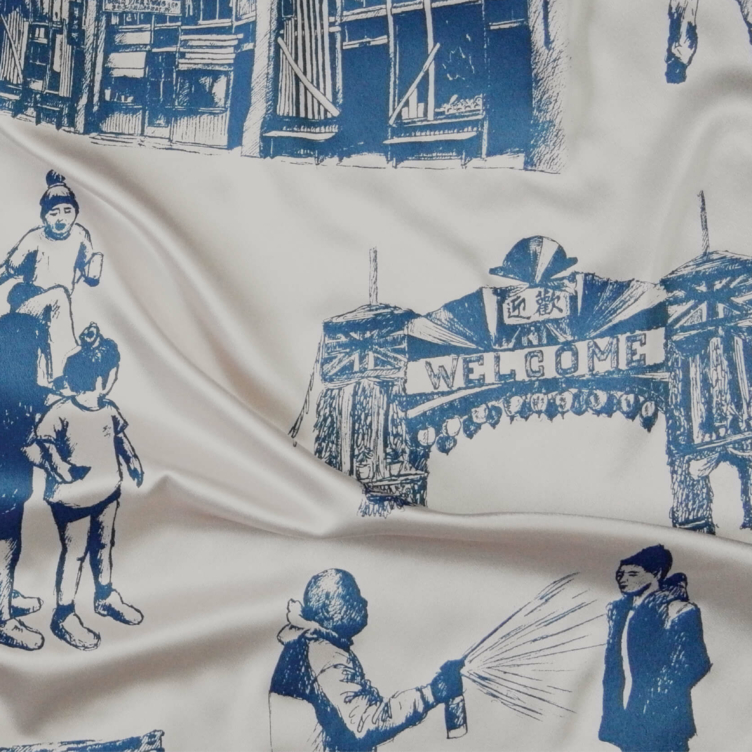 Karen Tam’s Autumn Tigers
Bridging Past and Present: Invisible Made Visible
By Imogene L. Lim, PhD
Karen Tam’s Autumn Tigers
Bridging Past and Present: Invisible Made Visible
By Imogene L. Lim, PhD
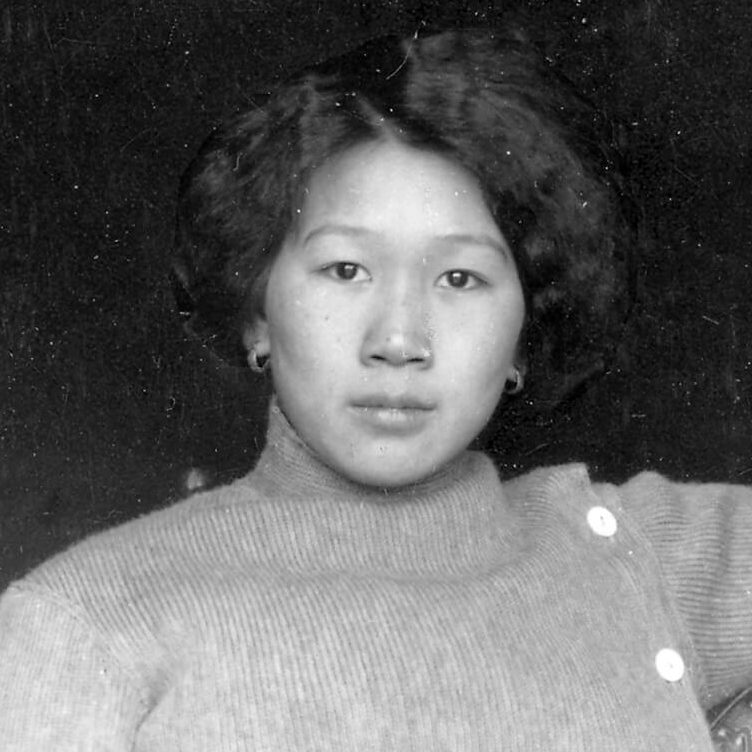 The Frontier Portraits of C.D. Hoy
A Chinese Canadian Photographer’s Tribute to His Community
By Faith Moosang
The Frontier Portraits of C.D. Hoy
A Chinese Canadian Photographer’s Tribute to His Community
By Faith Moosang
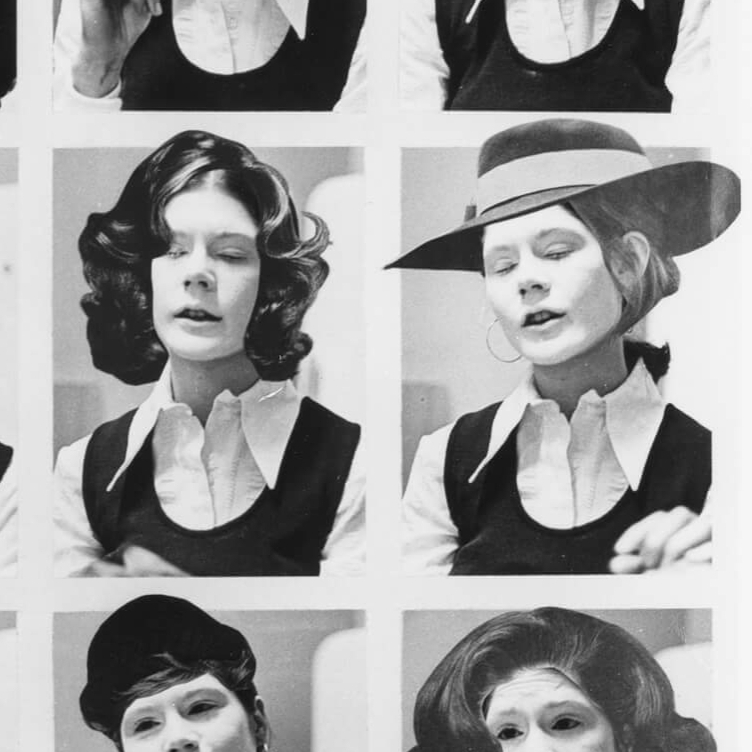 Interrogating Identity
Suzy Lake explores the role of photography in shaping how we understand and see ourselves
By Erin Silver
Interrogating Identity
Suzy Lake explores the role of photography in shaping how we understand and see ourselves
By Erin Silver
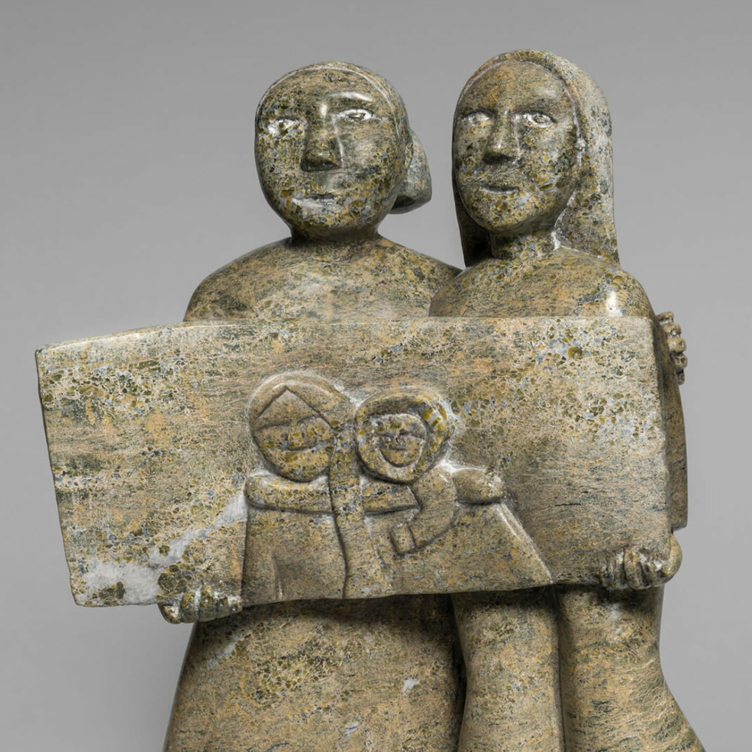 An Emboldened Artist
How Oviloo Tunnillie achieved rare international acclaim as an Inuit female sculptor
By Darlene Coward Wight
An Emboldened Artist
How Oviloo Tunnillie achieved rare international acclaim as an Inuit female sculptor
By Darlene Coward Wight
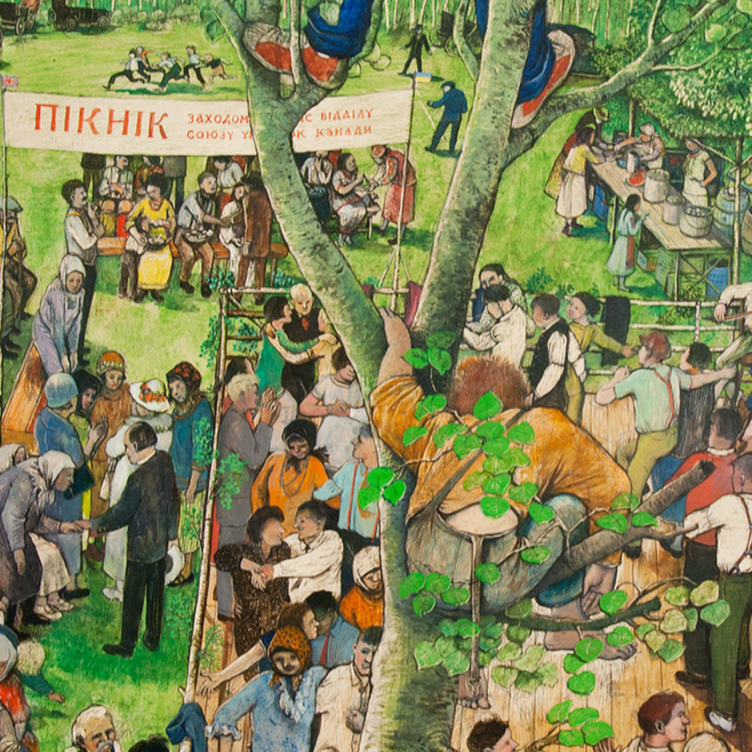 Painting the Cultural Mosaic
William Kurelek traversed the country in a quest to capture its diverse inhabitants
By Andrew Kear
Painting the Cultural Mosaic
William Kurelek traversed the country in a quest to capture its diverse inhabitants
By Andrew Kear
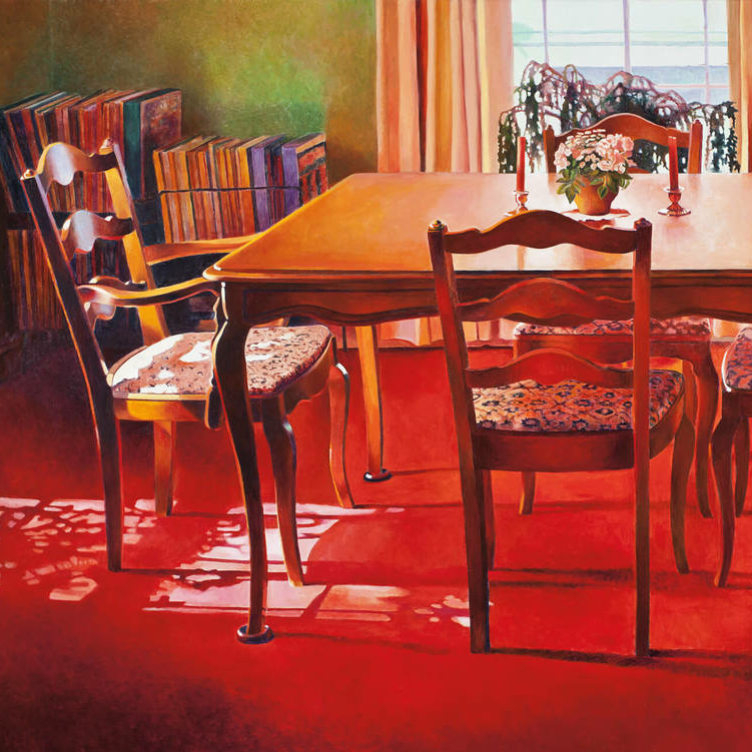 Domestic Discontent
Mary Pratt’s poetic scenes of home life are praised for their political edge
By Ray Cronin
Domestic Discontent
Mary Pratt’s poetic scenes of home life are praised for their political edge
By Ray Cronin
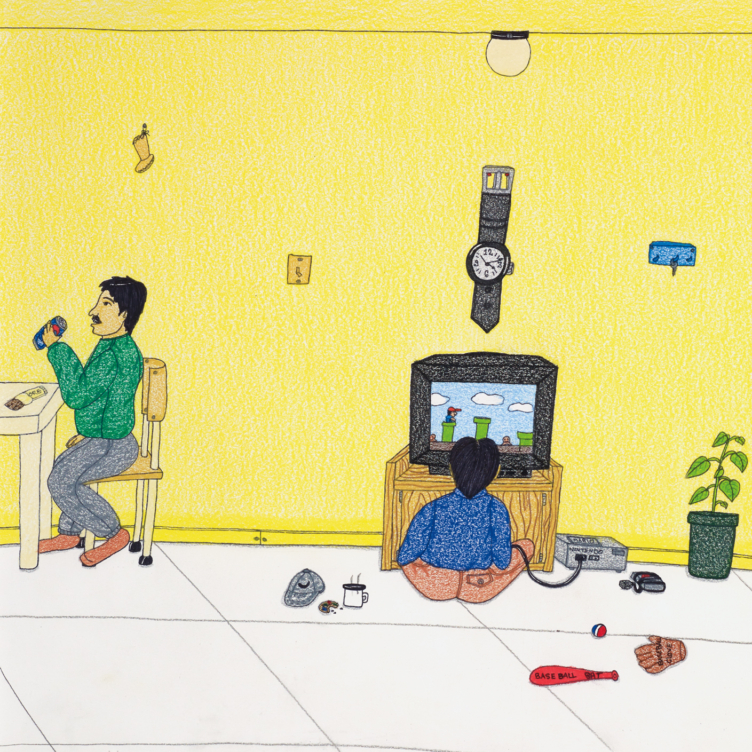 A New Vision of the North
Annie Pootoogook’s art offers unprecedented insights into the contemporary Arctic
By Nancy G. Campbell
A New Vision of the North
Annie Pootoogook’s art offers unprecedented insights into the contemporary Arctic
By Nancy G. Campbell
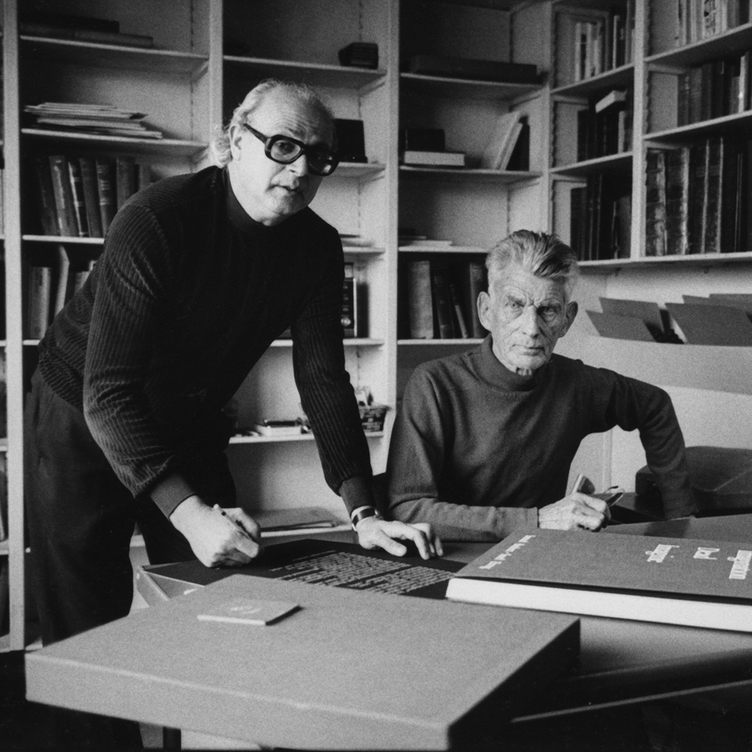 Meetings of Minds
Sorel Etrog found new ideas in collaborative work
By Alma Mikulinsky
Meetings of Minds
Sorel Etrog found new ideas in collaborative work
By Alma Mikulinsky
 Introducing Miss Chief
An excerpt from the ACI’s book “Revision and Resistance”
By Shirley Madill
Introducing Miss Chief
An excerpt from the ACI’s book “Revision and Resistance”
By Shirley Madill
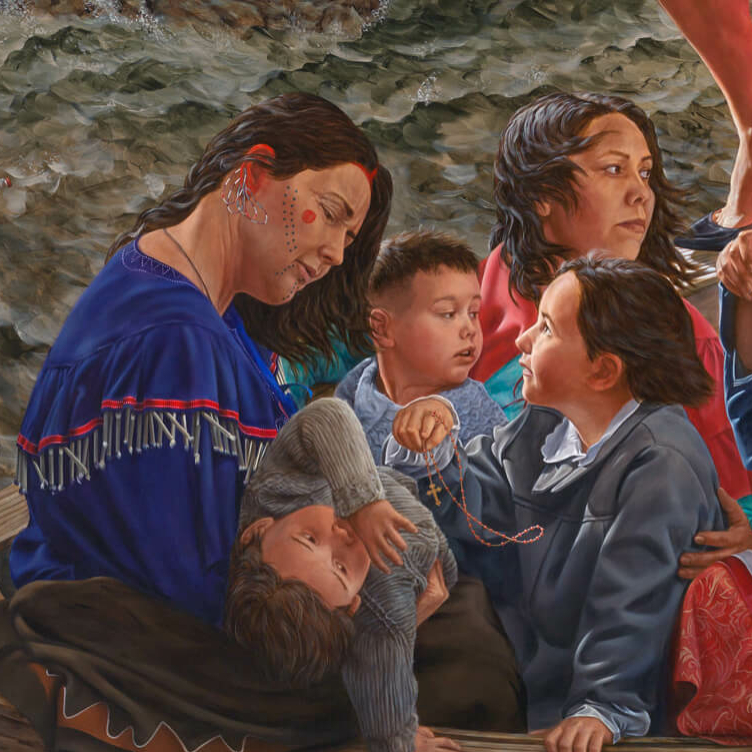 A Practice of Recovery
An excerpt from the ACI’s book “Revision and Resistance”
By Sasha Suda
A Practice of Recovery
An excerpt from the ACI’s book “Revision and Resistance”
By Sasha Suda
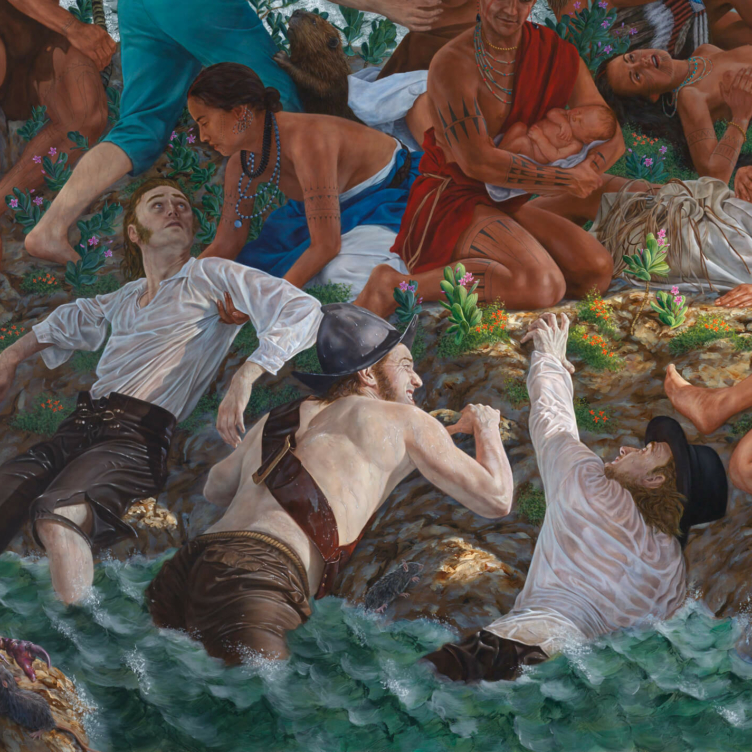 Decolonizing History Painting
An excerpt from the ACI’s book “Revision and Resistance”
By Ruth B. Phillips and Mark Salber Phillips
Decolonizing History Painting
An excerpt from the ACI’s book “Revision and Resistance”
By Ruth B. Phillips and Mark Salber Phillips
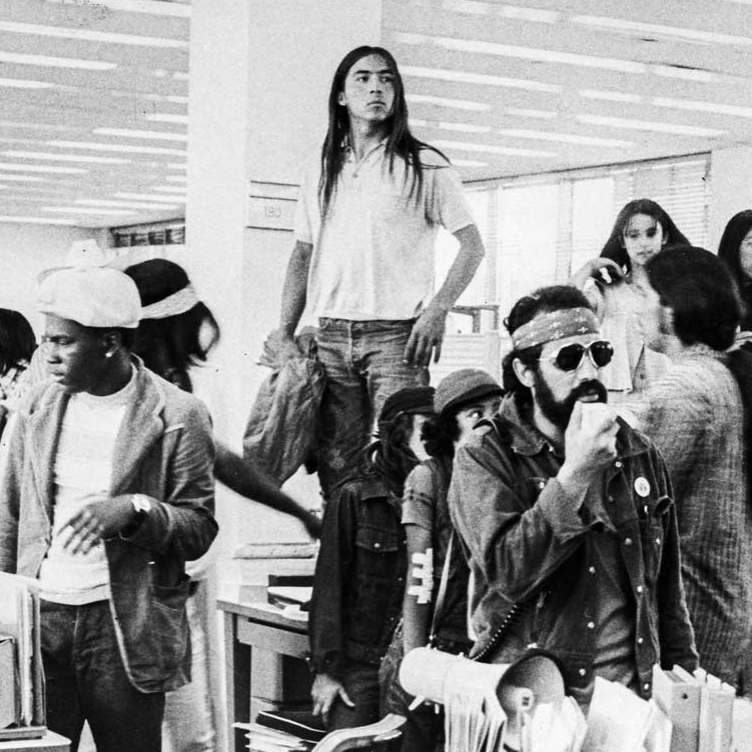 A Vision for the Future
An excerpt from the ACI’s book “Revision and Resistance”
By Nick Estes
A Vision for the Future
An excerpt from the ACI’s book “Revision and Resistance”
By Nick Estes
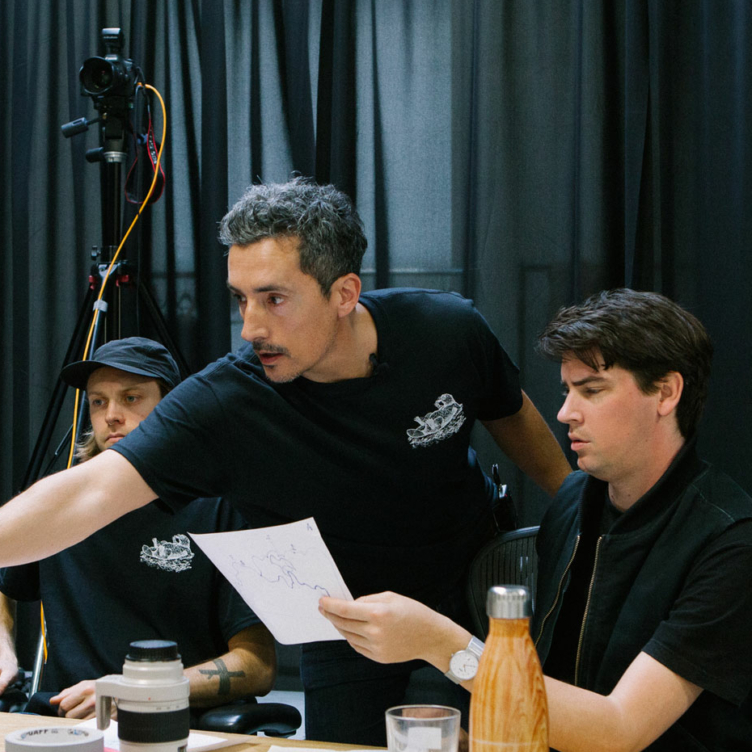 Inside Kent Monkman’s Studio
An excerpt from the ACI’s book “Revision and Resistance”
By Jami C. Powell
Inside Kent Monkman’s Studio
An excerpt from the ACI’s book “Revision and Resistance”
By Jami C. Powell
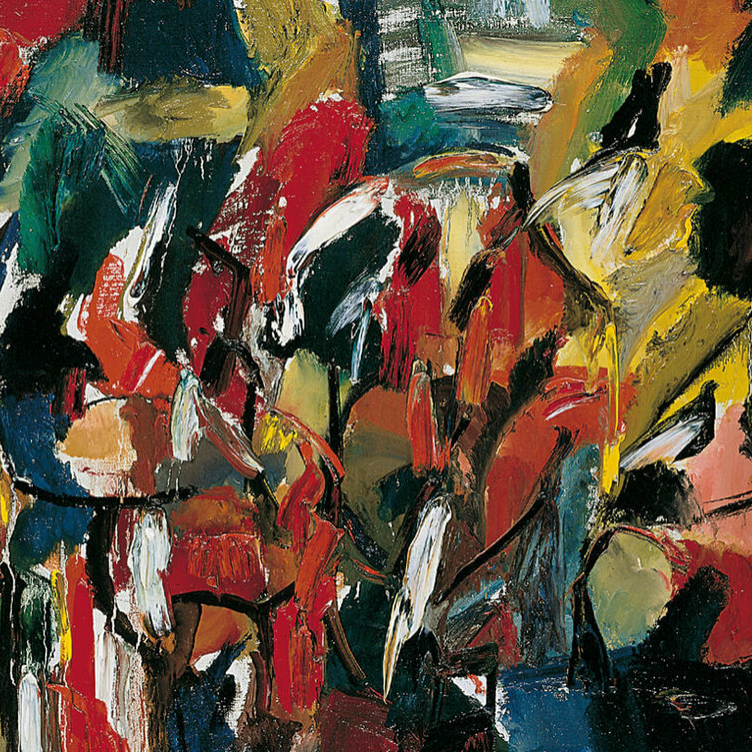 The Rule of Chance
Jean Paul Riopelle’s break with Automatism
By François-Marc Gagnon
The Rule of Chance
Jean Paul Riopelle’s break with Automatism
By François-Marc Gagnon
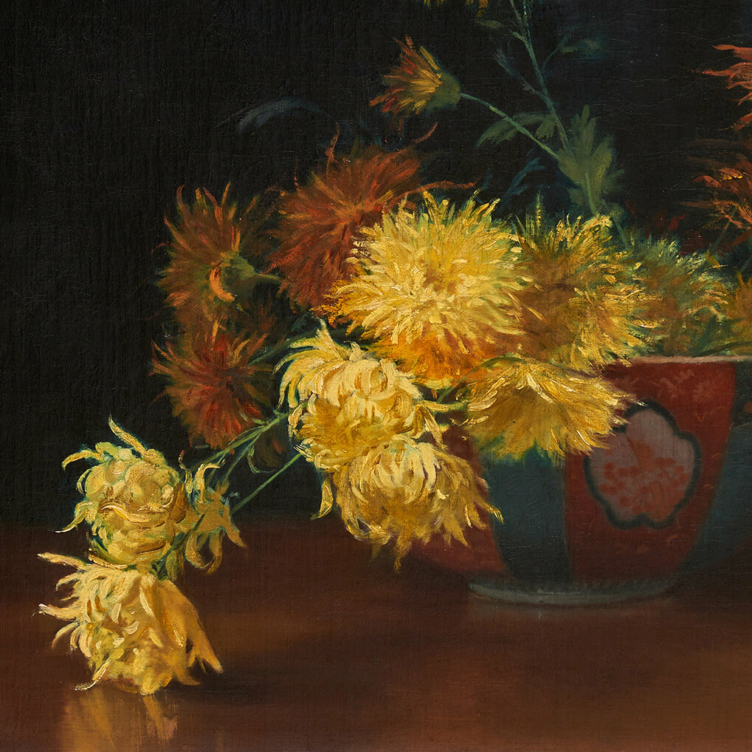 An Artist Blooms
Mary Hiester Reid’s floral aesthetics
By Andrea Terry
An Artist Blooms
Mary Hiester Reid’s floral aesthetics
By Andrea Terry
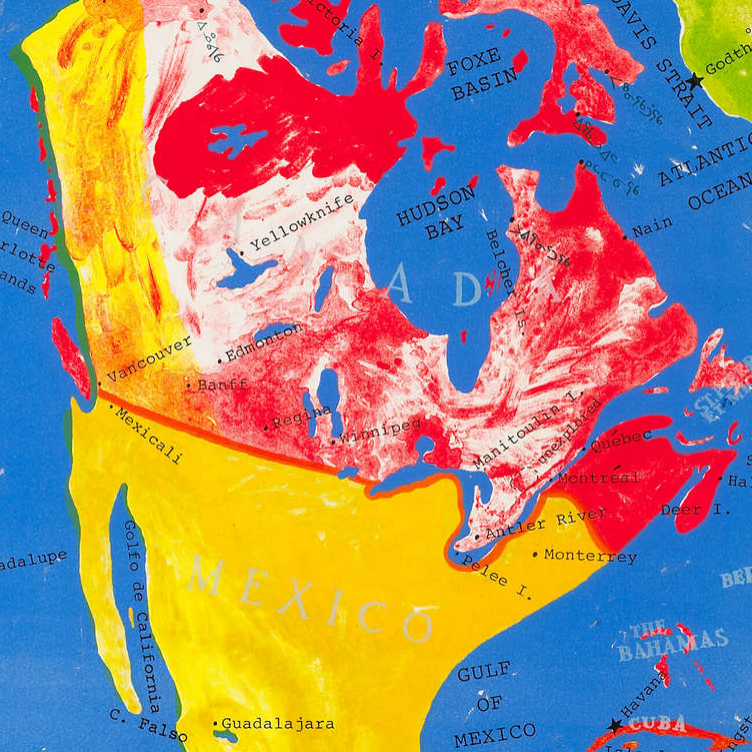 The Patriotic Painter
Greg Curnoe’s Canada
By Judith Rodger
The Patriotic Painter
Greg Curnoe’s Canada
By Judith Rodger
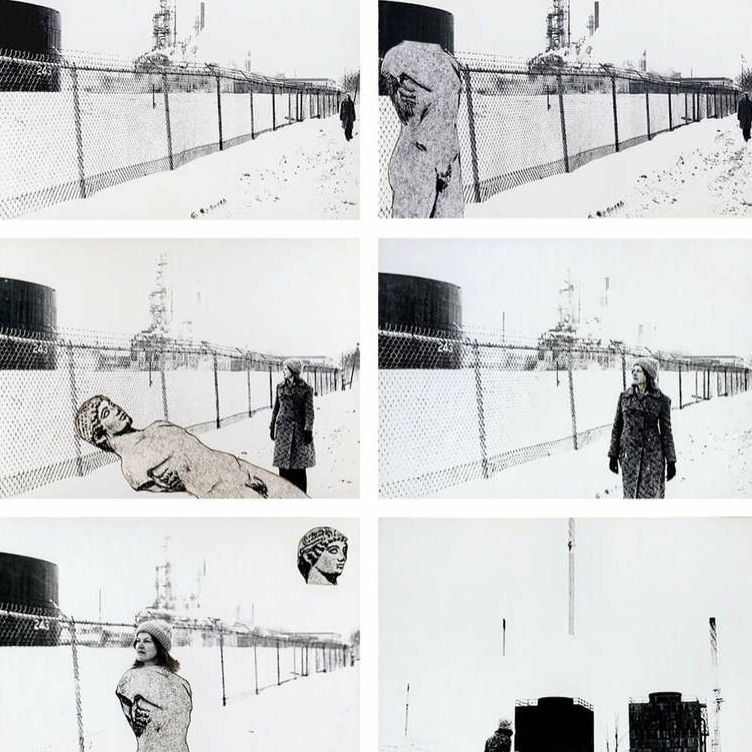 Walking, Stacking, Dancing
Françoise Sullivan’s conceptual 1970s
By Annie Gérin
Walking, Stacking, Dancing
Françoise Sullivan’s conceptual 1970s
By Annie Gérin
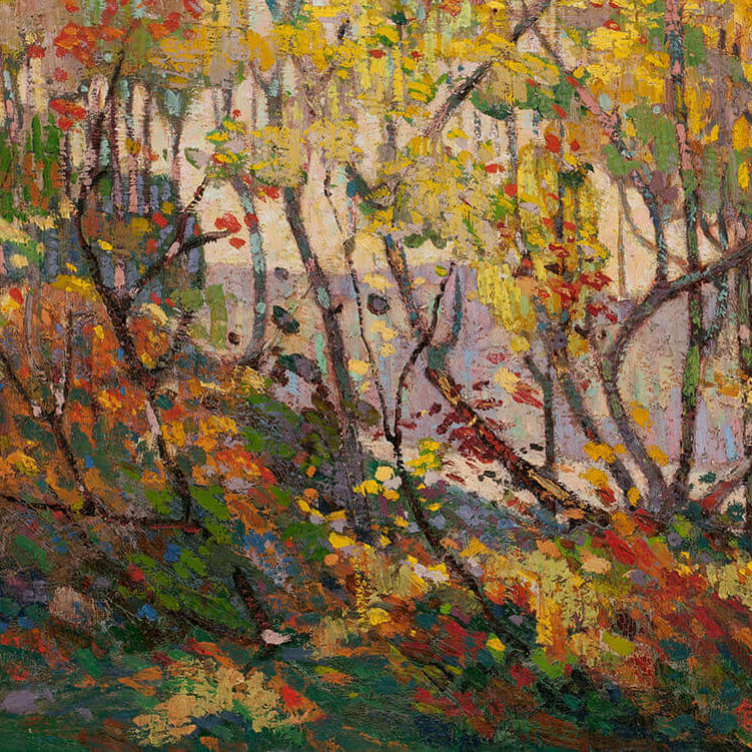 The Extraordinary North
Tom Thomson’s diary of landscape
By David P. Silcox
The Extraordinary North
Tom Thomson’s diary of landscape
By David P. Silcox
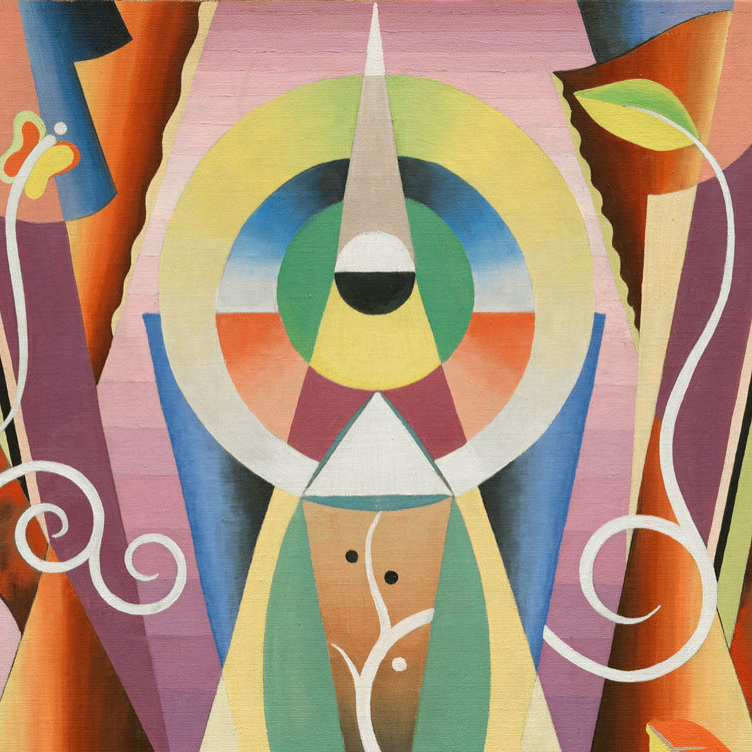 A Champion of Abstraction
Jock Macdonald sought a new expression in art
By Joyce Zemans
A Champion of Abstraction
Jock Macdonald sought a new expression in art
By Joyce Zemans
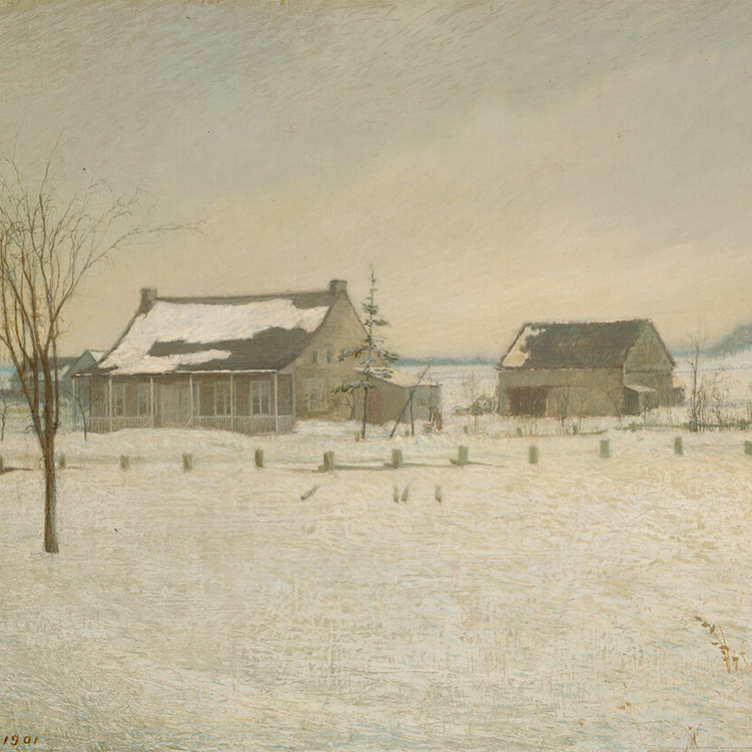 Defiant Spirit
Quebecois artist Ozias Leduc drew on Europe but created a Canadian ideal
By Laurier Lacroix
Defiant Spirit
Quebecois artist Ozias Leduc drew on Europe but created a Canadian ideal
By Laurier Lacroix