Kathleen Munn (1887–1974) is renowned today for experimenting with abstraction in the early 1920s—ahead of most Canadian artists. But during her lifetime she was little known. Munn was a devoted modernist and read widely on topics ranging from the history and theory of art and design to poetry and philosophy. Her intellectual pursuits were complemented by her travels to Europe in the 1920s and 1930s and her repeated visits to the Metropolitan Museum of Art in New York. These activities were foundational in her development as an artist.
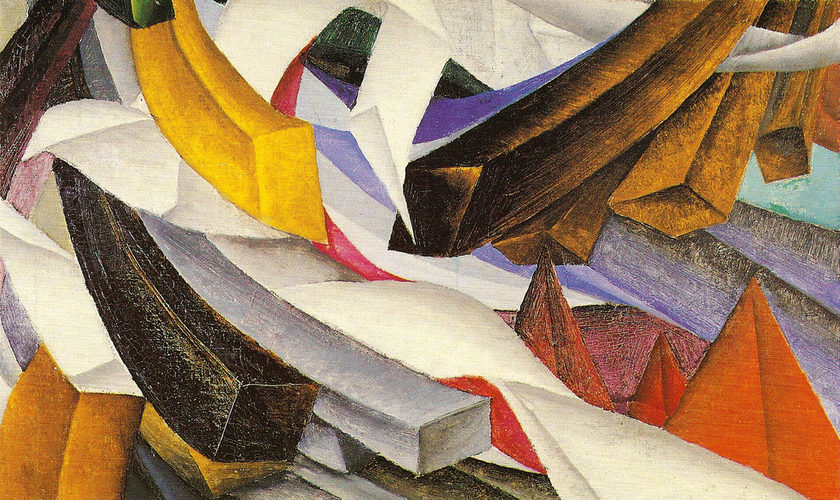
Oil on canvas, 37 x 60 cm, National Gallery of Canada, Ottawa
Munn’s subject matter was established early and did not change: landscapes, figure studies, biblical themes, and still lifes. Her artistic pursuits—with paintings including Untitled (Cows on a Hillside), c.1916, and Untitled I, c.1926–28, the first purely abstract work made in Canada—were rooted in New York modernism and differed from those of her contemporaries, most of the Group of Seven artists, who were committed to a national art movement. This distinction is significant in why she has not played a more prominent role in Canadian art history. Although recognized in the twenties and thirties as one of the most “advanced” women artists in Canada, Munn remained on the periphery of the Canadian art scene. After she stopped making art, her work was largely forgotten.
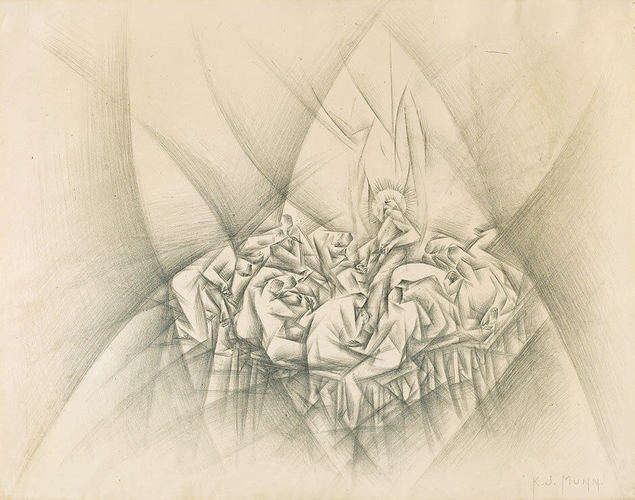
Graphite on paper, 38.7 x 49.5 cm, Art Gallery of Ontario, Toronto
During her lifetime Munn sold or gifted very few works. Her only sale to an art museum took place in 1945 when the Art Gallery of Toronto (now Art Gallery of Ontario) purchased two of her drawings from the Passion series. No other works entered public collections until 1971, when the Art Gallery of Hamilton received a donation of her painting Mother and Child, c.1930. Since very few of Munn’s works were collected privately, her family was left a comprehensive record of her artistic output. Her estate also included her extensive library as well as her rich and significant archives, now housed at the Art Gallery of Ontario.
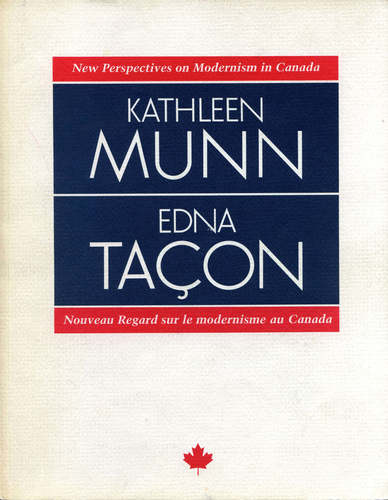
modern art in Canada.
Munn gradually abandoned her artmaking around 1940, likely owing to a combination of events. For the first time, family duties distracted her from the studio. Also, now in her fifties, she suffered from cataracts and, more importantly, from a sustained lack of critical attention to her work. Although Munn had been included in two Group of Seven exhibitions, in 1928 and 1930, she was discouraged by the group’s dominance.
In 1974 Charles Hill and Rosemary Tovell, two curators from the National Gallery of Canada (NGC), visited Munn in Toronto while researching the exhibition Canadian Painting in the Thirties. Subsequently, one of her final Passion series works was selected for purchase by the NGC. After decades of obscurity, Munn wrote of her hope: “a possible future for my work.” She did not live to see this happen. In October that year, before the sale was complete, she died, never knowing that her artistic achievements were soon to be recognized.
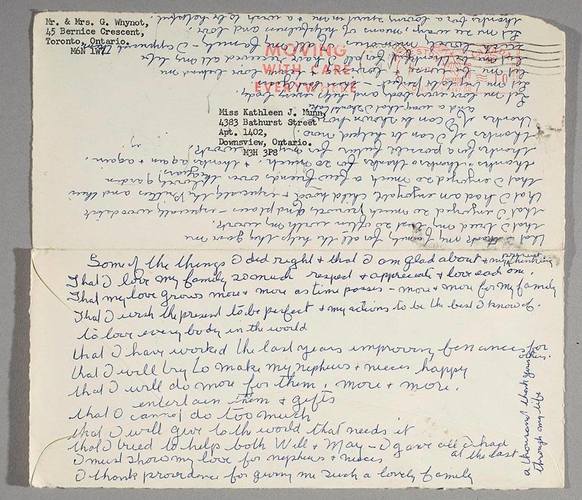
my present thinking.”
Art Gallery of Ontario, Toronto
In the mid-1980s scholars and curators, led by York University professor Joyce Zemans, began the important process of recovering Munn’s work. The exhibition Kathleen Munn, Edna Taçon: New Perspectives on Modernism in Canada reintroduced Kathleen Munn and affirmed her contribution to the history of modern art in Canada. As a result of this touring exhibition and its accompanying catalogue, her work was soon sought after by important private and public collections across Canada. Since then a number of travelling exhibitions and catalogues have established Munn’s important role.
This Essay is excerpted from Kathleen Munn: Life & Work by Georgiana Uhlyarik.
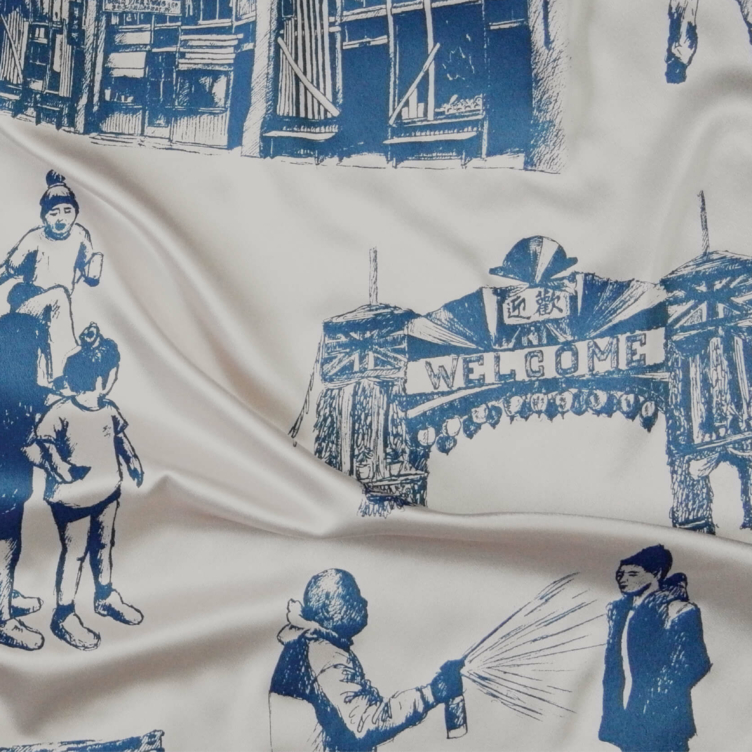 Karen Tam’s Autumn Tigers
Bridging Past and Present: Invisible Made Visible
By Imogene L. Lim, PhD
Karen Tam’s Autumn Tigers
Bridging Past and Present: Invisible Made Visible
By Imogene L. Lim, PhD
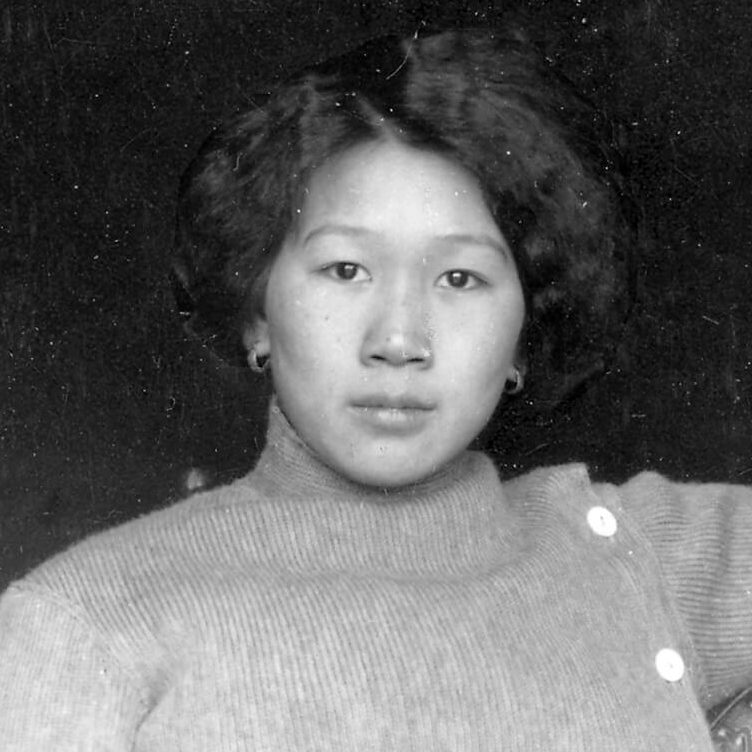 The Frontier Portraits of C.D. Hoy
A Chinese Canadian Photographer’s Tribute to His Community
By Faith Moosang
The Frontier Portraits of C.D. Hoy
A Chinese Canadian Photographer’s Tribute to His Community
By Faith Moosang
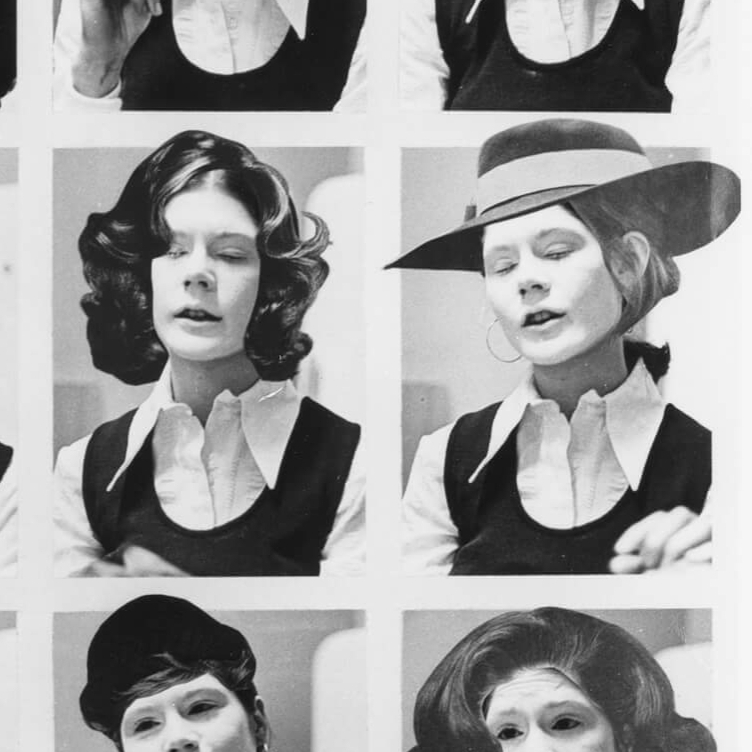 Interrogating Identity
Suzy Lake explores the role of photography in shaping how we understand and see ourselves
By Erin Silver
Interrogating Identity
Suzy Lake explores the role of photography in shaping how we understand and see ourselves
By Erin Silver
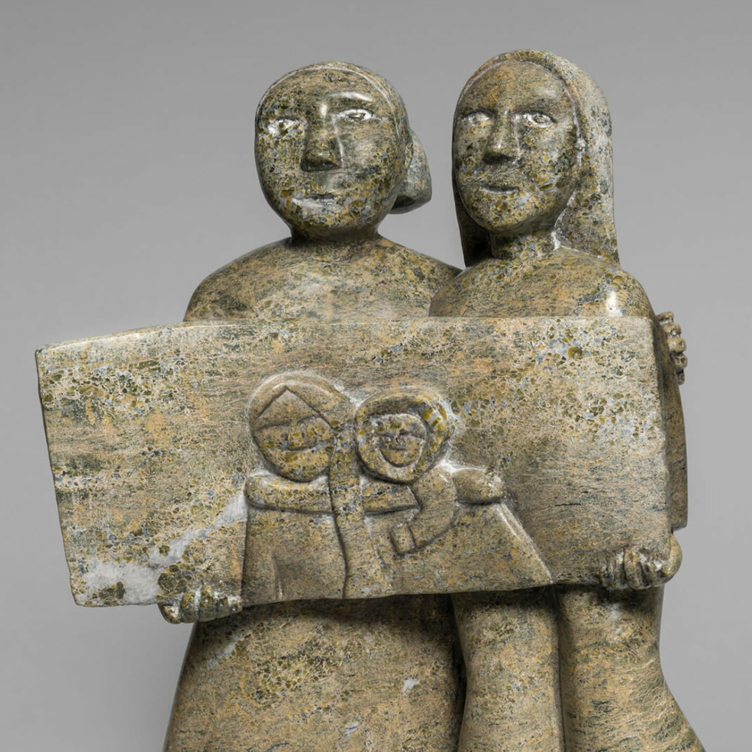 An Emboldened Artist
How Oviloo Tunnillie achieved rare international acclaim as an Inuit female sculptor
By Darlene Coward Wight
An Emboldened Artist
How Oviloo Tunnillie achieved rare international acclaim as an Inuit female sculptor
By Darlene Coward Wight
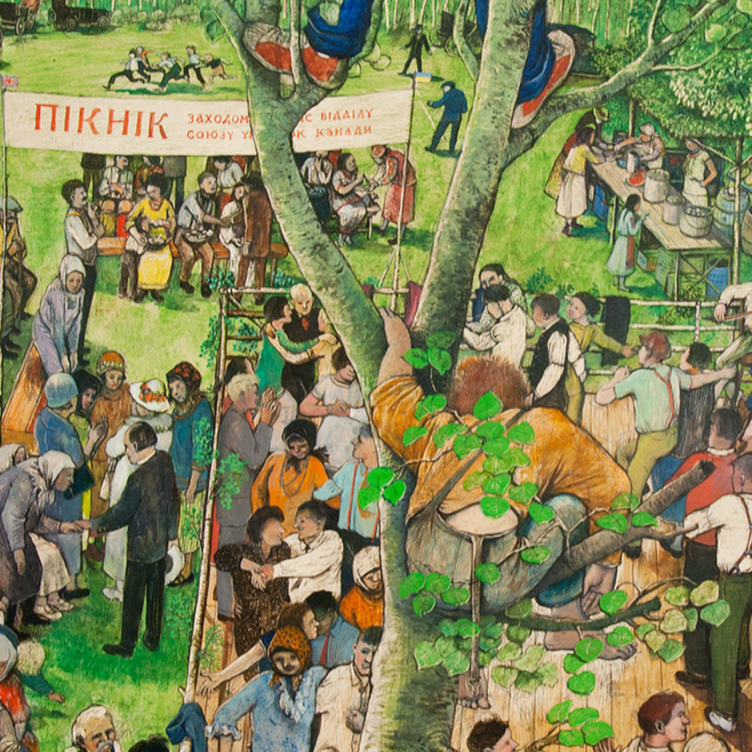 Painting the Cultural Mosaic
William Kurelek traversed the country in a quest to capture its diverse inhabitants
By Andrew Kear
Painting the Cultural Mosaic
William Kurelek traversed the country in a quest to capture its diverse inhabitants
By Andrew Kear
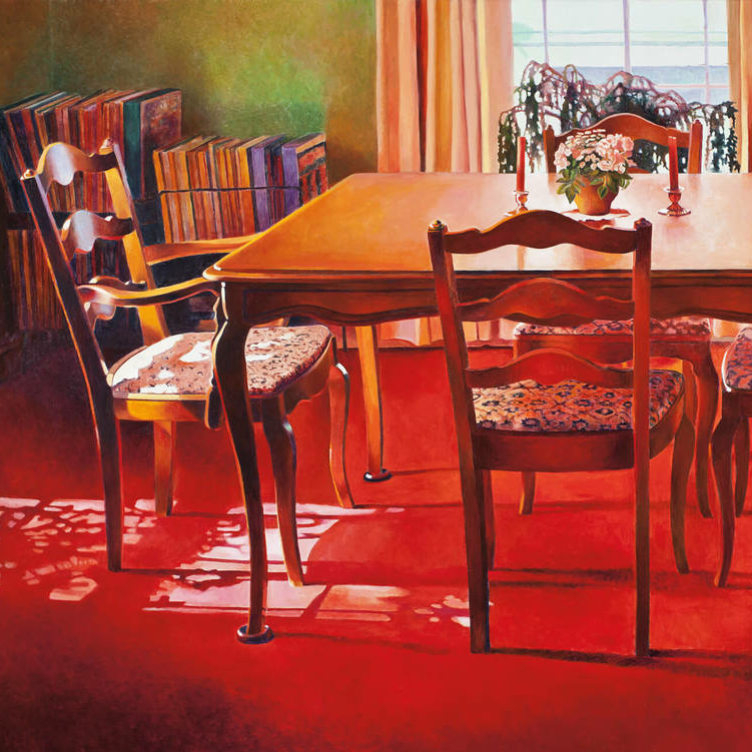 Domestic Discontent
Mary Pratt’s poetic scenes of home life are praised for their political edge
By Ray Cronin
Domestic Discontent
Mary Pratt’s poetic scenes of home life are praised for their political edge
By Ray Cronin
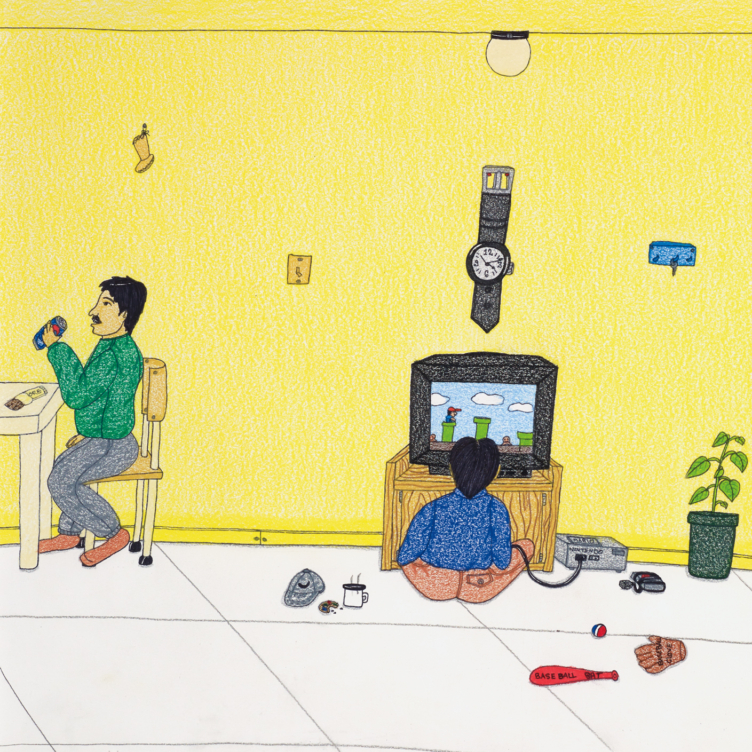 A New Vision of the North
Annie Pootoogook’s art offers unprecedented insights into the contemporary Arctic
By Nancy G. Campbell
A New Vision of the North
Annie Pootoogook’s art offers unprecedented insights into the contemporary Arctic
By Nancy G. Campbell
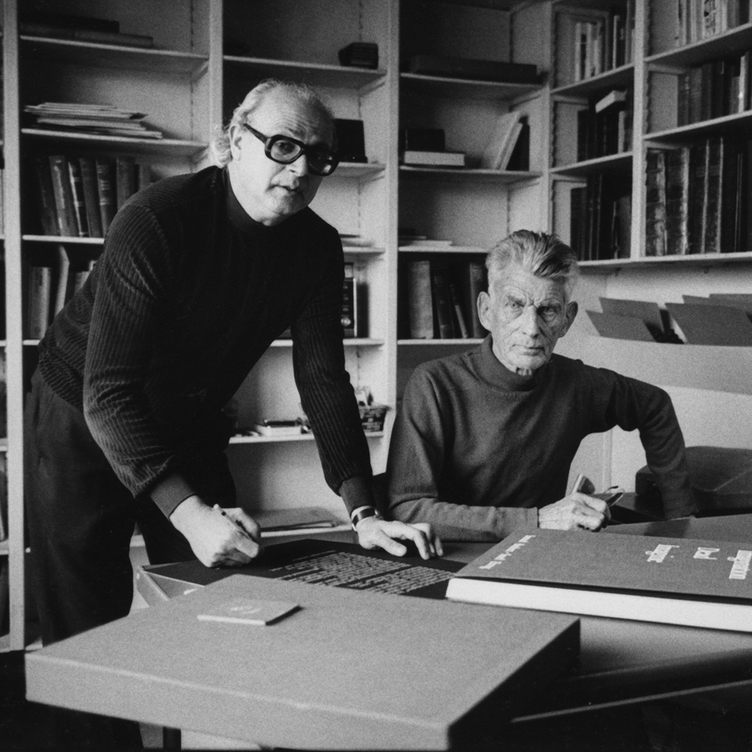 Meetings of Minds
Sorel Etrog found new ideas in collaborative work
By Alma Mikulinsky
Meetings of Minds
Sorel Etrog found new ideas in collaborative work
By Alma Mikulinsky
 Introducing Miss Chief
An excerpt from the ACI’s book “Revision and Resistance”
By Shirley Madill
Introducing Miss Chief
An excerpt from the ACI’s book “Revision and Resistance”
By Shirley Madill
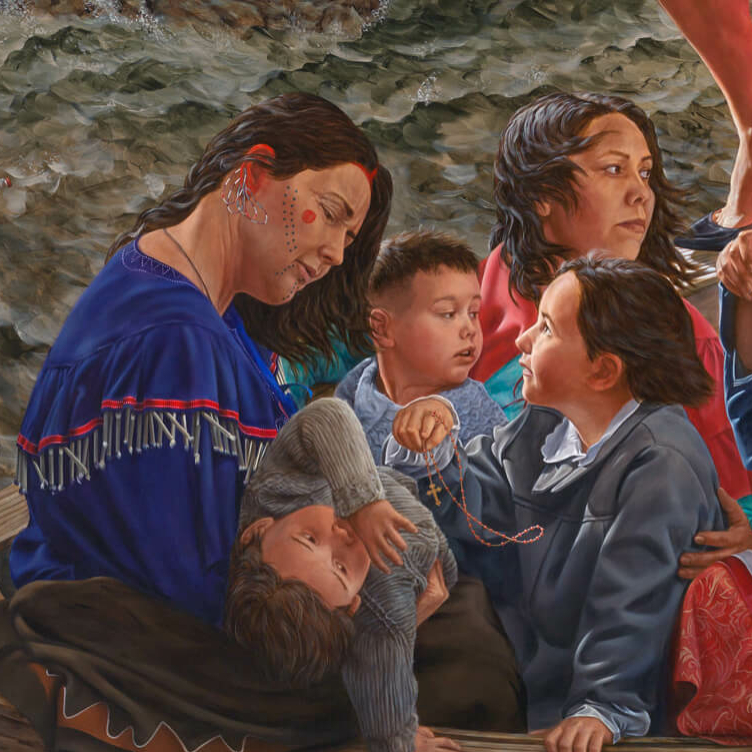 A Practice of Recovery
An excerpt from the ACI’s book “Revision and Resistance”
By Sasha Suda
A Practice of Recovery
An excerpt from the ACI’s book “Revision and Resistance”
By Sasha Suda
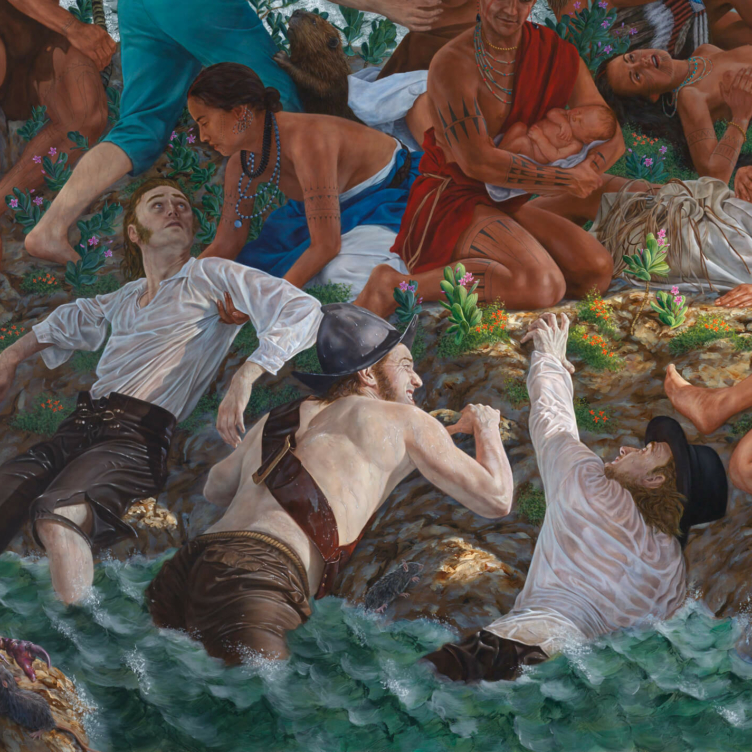 Decolonizing History Painting
An excerpt from the ACI’s book “Revision and Resistance”
By Ruth B. Phillips and Mark Salber Phillips
Decolonizing History Painting
An excerpt from the ACI’s book “Revision and Resistance”
By Ruth B. Phillips and Mark Salber Phillips
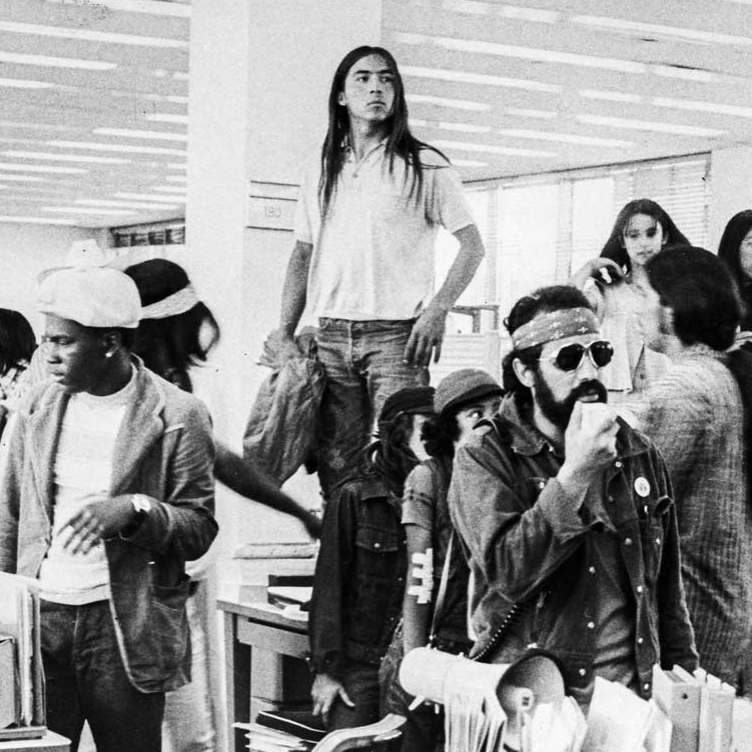 A Vision for the Future
An excerpt from the ACI’s book “Revision and Resistance”
By Nick Estes
A Vision for the Future
An excerpt from the ACI’s book “Revision and Resistance”
By Nick Estes
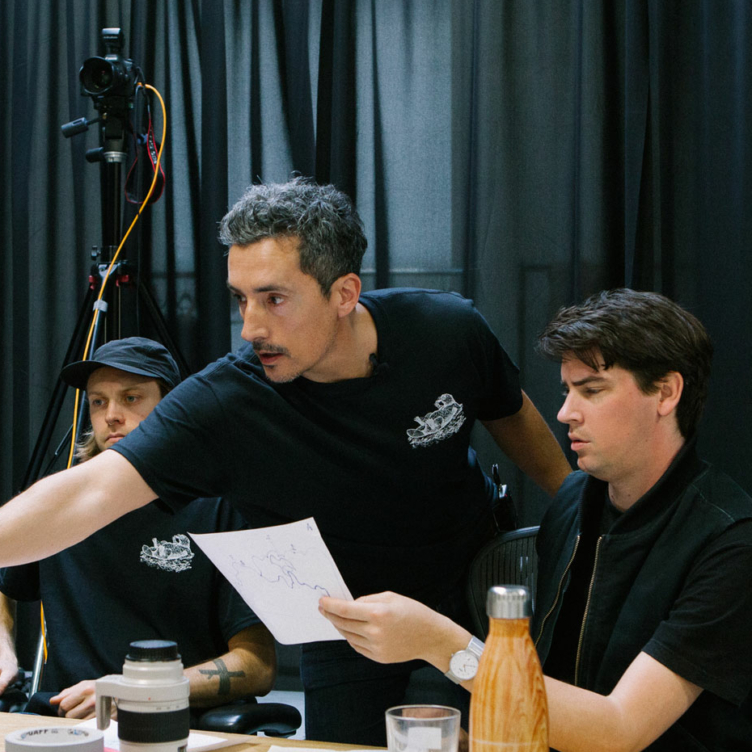 Inside Kent Monkman’s Studio
An excerpt from the ACI’s book “Revision and Resistance”
By Jami C. Powell
Inside Kent Monkman’s Studio
An excerpt from the ACI’s book “Revision and Resistance”
By Jami C. Powell
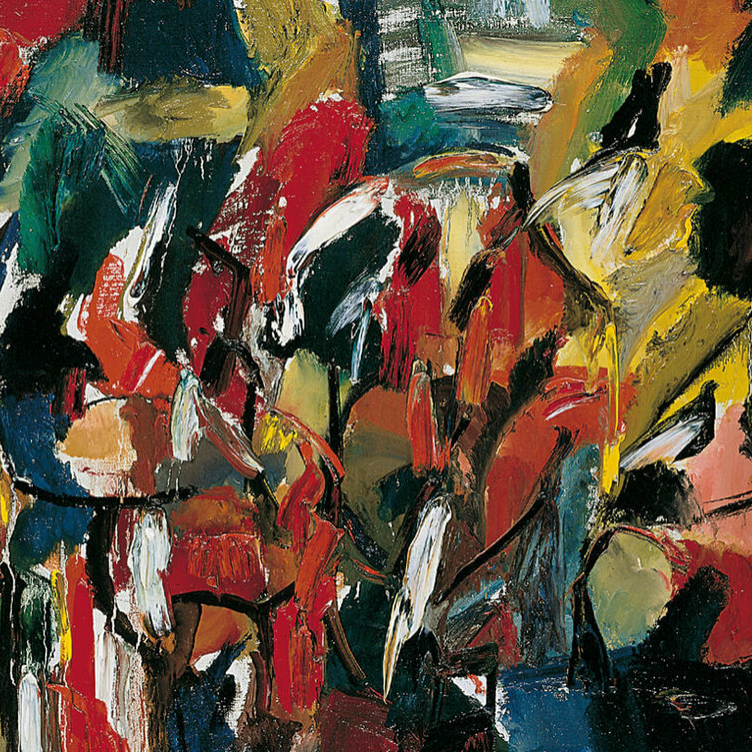 The Rule of Chance
Jean Paul Riopelle’s break with Automatism
By François-Marc Gagnon
The Rule of Chance
Jean Paul Riopelle’s break with Automatism
By François-Marc Gagnon
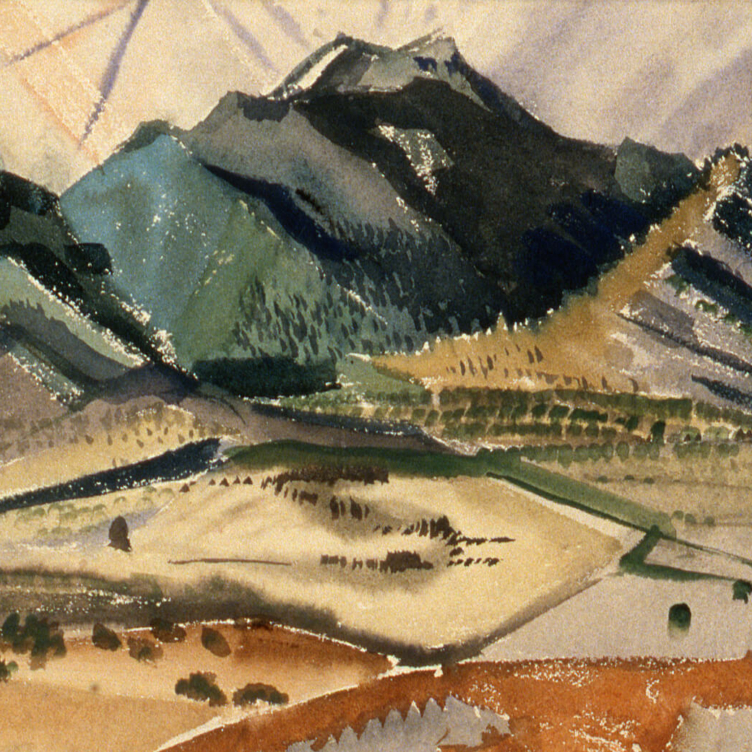 From Taos to New York
Agnes Martin and the currents of American Art
By Christopher Régimbal
From Taos to New York
Agnes Martin and the currents of American Art
By Christopher Régimbal
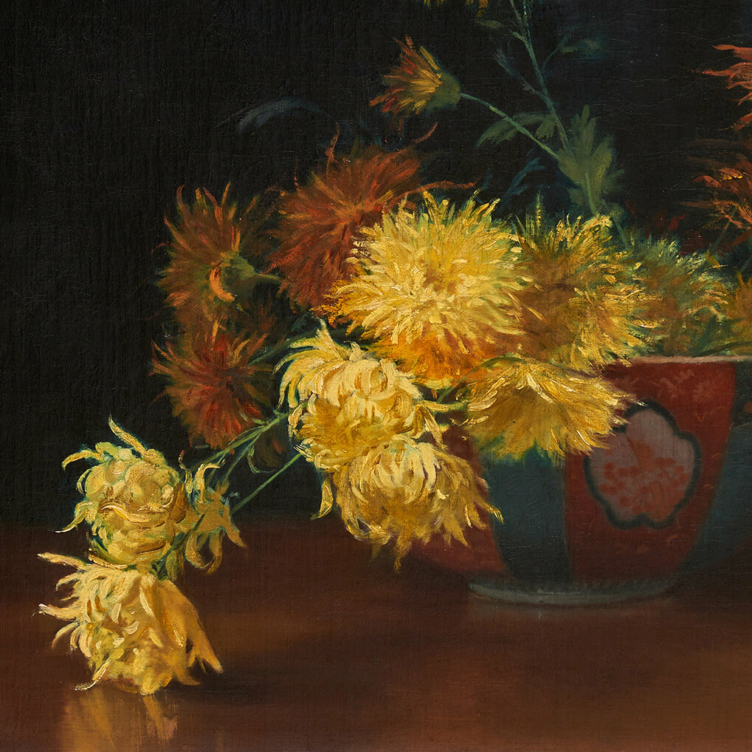 An Artist Blooms
Mary Hiester Reid’s floral aesthetics
By Andrea Terry
An Artist Blooms
Mary Hiester Reid’s floral aesthetics
By Andrea Terry
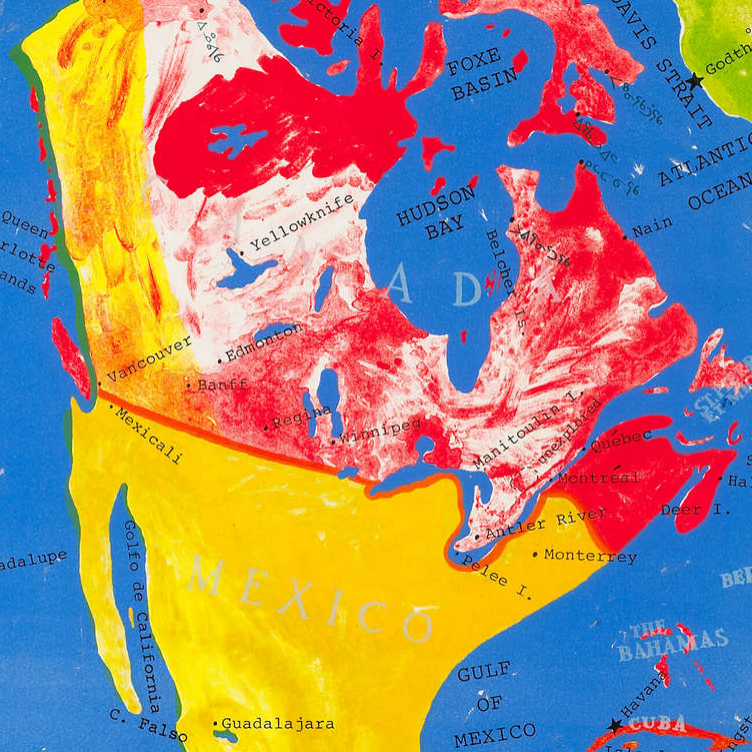 The Patriotic Painter
Greg Curnoe’s Canada
By Judith Rodger
The Patriotic Painter
Greg Curnoe’s Canada
By Judith Rodger
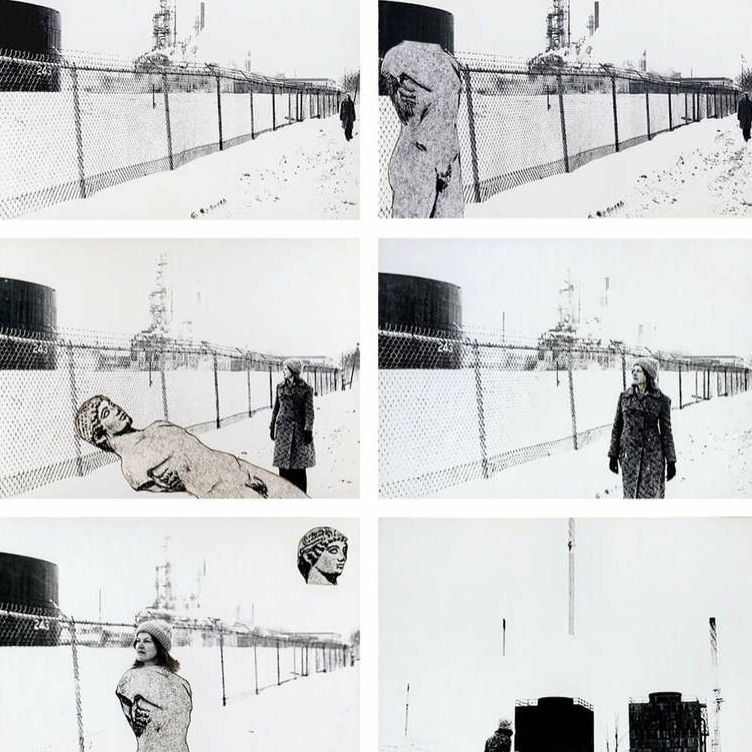 Walking, Stacking, Dancing
Françoise Sullivan’s conceptual 1970s
By Annie Gérin
Walking, Stacking, Dancing
Françoise Sullivan’s conceptual 1970s
By Annie Gérin
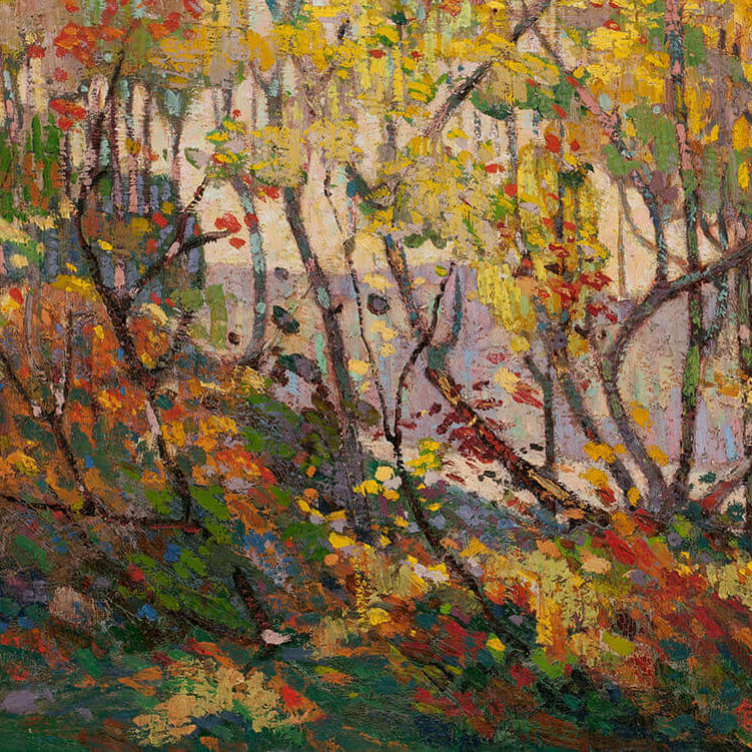 The Extraordinary North
Tom Thomson’s diary of landscape
By David P. Silcox
The Extraordinary North
Tom Thomson’s diary of landscape
By David P. Silcox
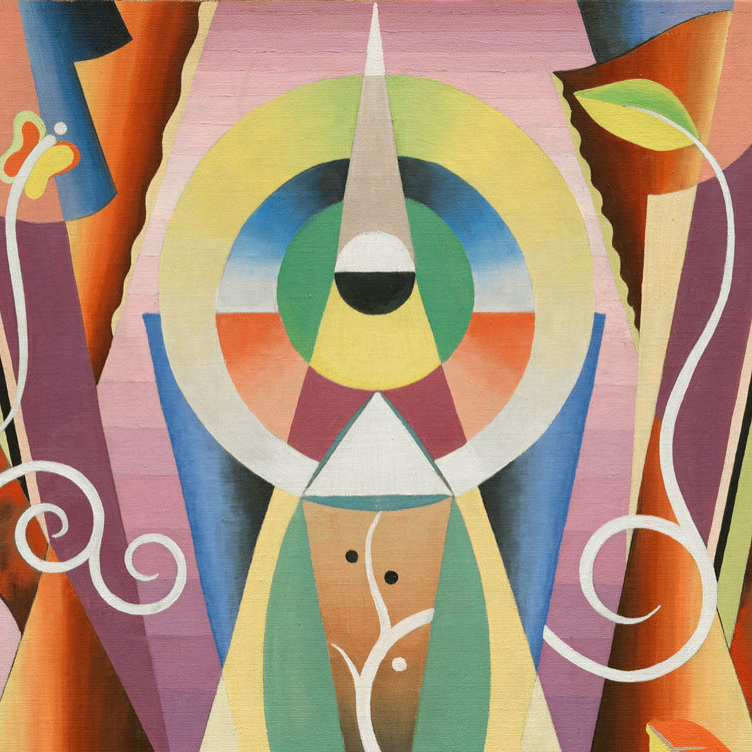 A Champion of Abstraction
Jock Macdonald sought a new expression in art
By Joyce Zemans
A Champion of Abstraction
Jock Macdonald sought a new expression in art
By Joyce Zemans