The Quebecois painter Jean Paul Lemieux (1904–1990) once said, “Childhood is light and joy, the age of perfect happiness. It is possible to be happy before the age of ten, and after the age of fifty. Between those two ages it is all struggle and bitter combat.” The artist’s symbolic universe is crystallized in 1910 Remembered. In the work he is flanked by his parents, both rendered in side view, facing each other across the canvas. Veritable pillars of a tenderly happy childhood, they frame the little boy in the tight pictorial space, giving him their benevolent protection.
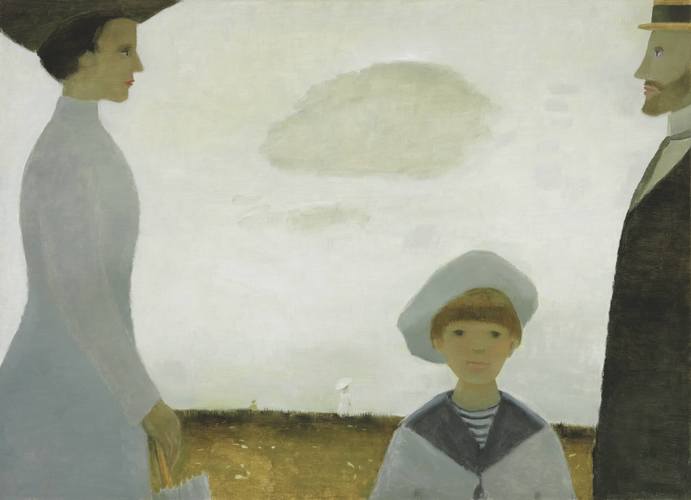
Jean Paul Lemieux, 1910 Remembered, 1962
Oil on canvas, 108 x 148.8 cm, private collection
Did Lemieux mean to evoke his father’s frequent absences from home by showing him half in and half out of the picture? At age six a child’s consciousness of self is mediated through their parents. Behind the family trio smaller figures move away over the low horizon and into the park—their comparatively tiny shapes emphasizing the immensity of the luminous, cottony sky. Clouds pass over the scene and balance the masses of colour that would otherwise be overwhelmed by the light, flat area that extends over almost the whole surface.
This Spotlight is excerpted from Jean Paul Lemieux: Life & Work by Michèle Grandbois.
 Stitching the Archives
 A Working-Class Hero
 Imagining Entangled Futures
 Bridging Far and Near
 Soft Power
 Imagining Emancipation
 A Priceless Portrait
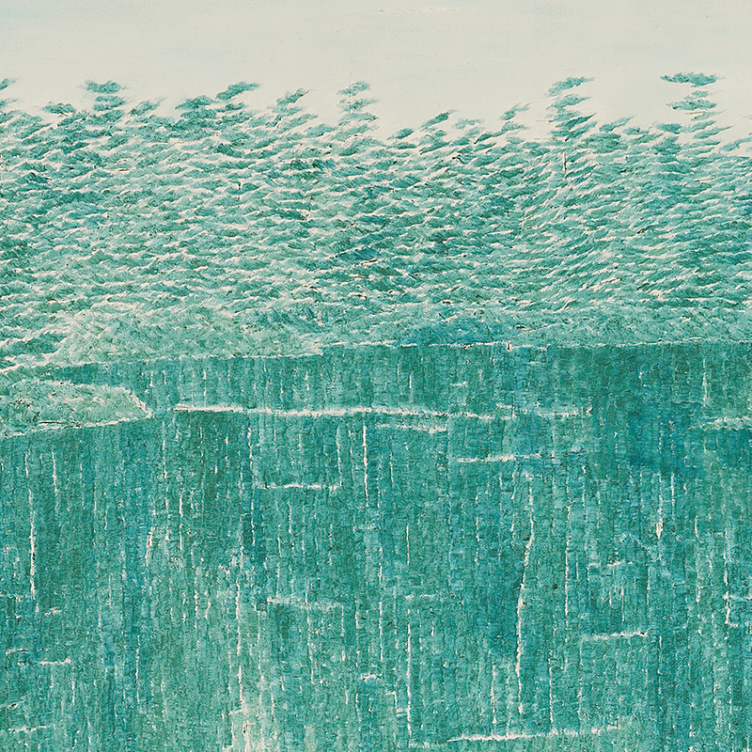 Meditation in Monochrome
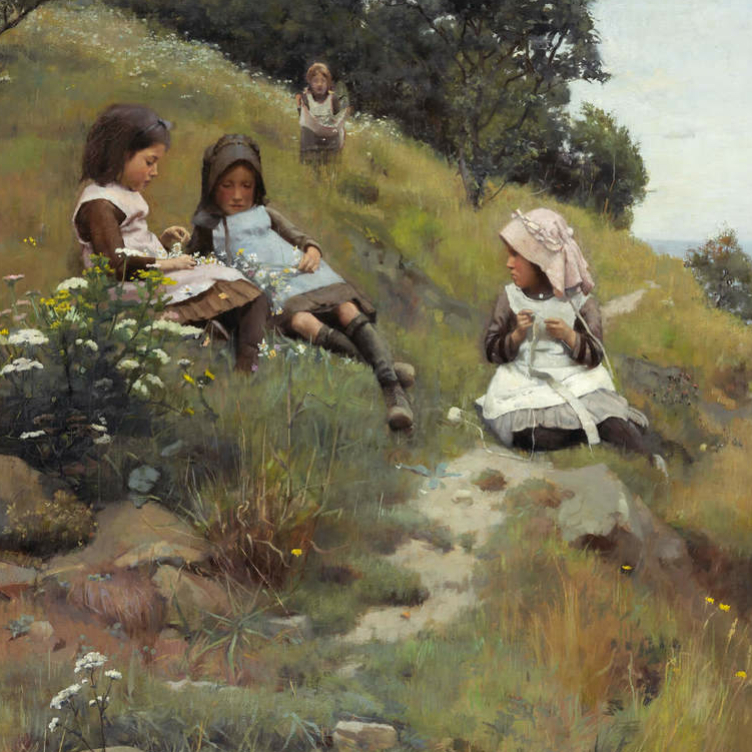 Making His Mark
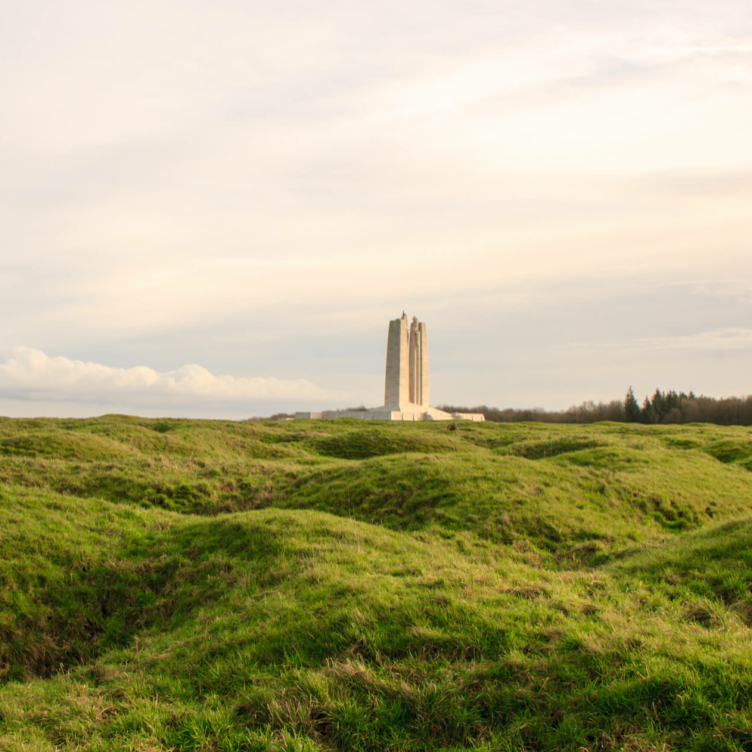 Honour and Sacrifice
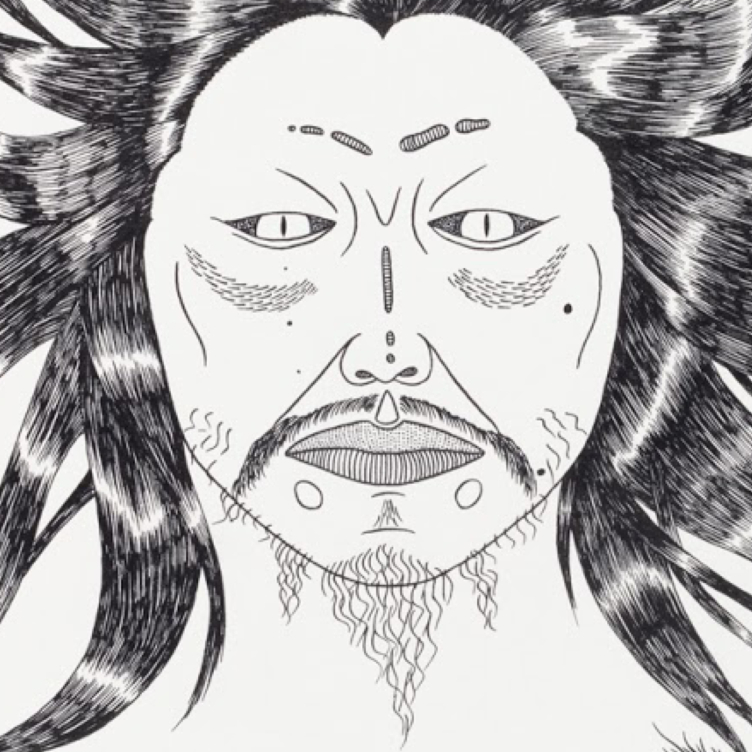 A Monstrous Vision
 Remote Beauty
 Pride and Resistance
 Dressed for Danger
 Masks from the Past
 Lessons from the Land
 A Cultural Hero
 Food for Thought
 A Passion for Activism
 Starvation and Scandal