After almost two years of lobbying, in June 1945 Lieutenant Molly Lamb (1920–2014) became the first and only woman accredited by the federal government as one of the thirty-two official Canadian war artists. The others, all of whom belonged to the Canadian Armed Forces, included Aba Bayefsky (1923–2001), Lawren P. Harris (1910–1994), Charles Comfort (1900–1994), Will Ogilvie (1901–1989), Alex Colville (1920–2013), and Bruno Bobak (1923–2012), whom she married later that same year.
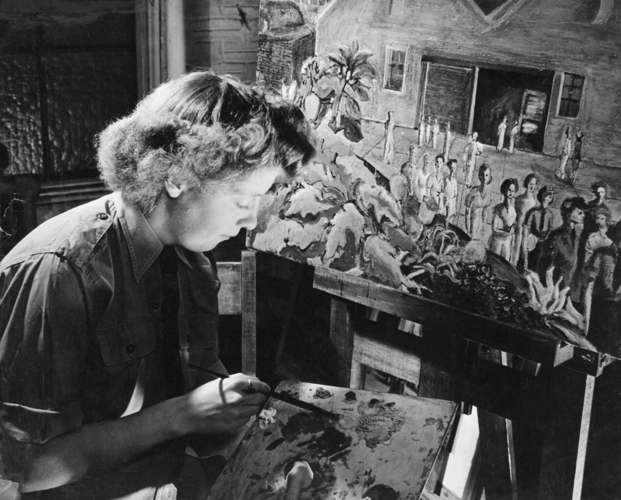
Molly in her studio, n.d., photographer unknown.
Because Lamb was a woman, she was assigned to overseas duty only at the end of the war when hostilities in Europe had ceased. Colonel A.F. Duguid, director of the Canadian Army Historical Section and the army’s representative on the Canadian War Artists Selection Committee, stated in June 1943 that “from the Army’s point of view their [women’s] appointment was not desirable as the artists were at the scene of combat.” The National Gallery of Canada disagreed and commissioned Alma Duncan (1917–2004), Pegi Nicol MacLeod (1904–1949), and Paraskeva Clark (1898–1986) to document the war effort in Canada, focusing on women’s contributions and perspective. By the autumn of 1944 the War Artists Selection Committee proposed sending Lamb abroad as a war artist. Six months later, with Europe secured, she finally received permission to travel.
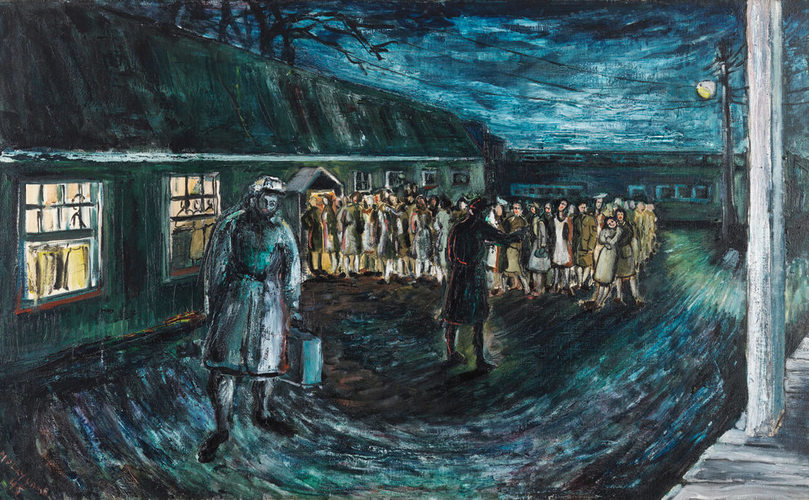
Molly Lamb, Signing Up for the Pacific, 1945
Oil on canvas, 50.5 x 83.5 cm, Canadian War Museum, Ottawa
When asked years later whether she chose to focus on “the human element in the war effort away from the battlefront,” she replied:
“They didn’t lay down any laws but the women weren’t near the battle ever. . . . The women were mostly behind the lines in Europe and the war was over anyway and so . . . if I saw Amsterdam . . . I would just put a few little CWACs [Canadian Women’s Army Corps] in the street and paint the city and that was valid. The CWACs were there . . . I think the government would have liked me to have painted the activities of the women, and I did—in laundries, as drivers and chauffeurs, and the pipe band, but then I also threw in a lot of my own ideas.”
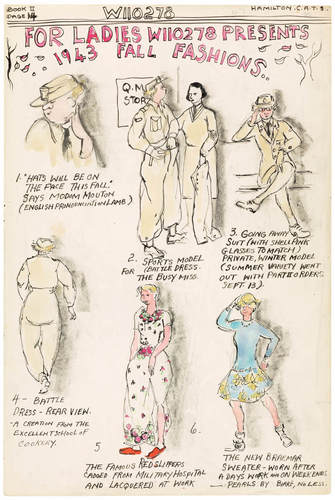
Molly Lamb, “For Ladies W110278 Presents 1943 Fall Fashions,” 1943, from W110278: The Personal War Records of Private Lamb, M., 1942–45
Pencil and watercolour with pen and black ink on wove paper, Library and Archives Canada, Ottawa
Lamb was no doubt aware of gender bias in both the army and the Canadian art world generally, but she usually dealt with such issues with parody and good humour. While military recruitment posters presented servicewomen in glamorous, idealized contexts to combat fears over the “de-feminization” of women in the military, Lamb used caricature to poke fun at these images. On one occasion in her diary she produced a special colour supplement titled “For Ladies[,] W110278 Presents 1943 Fall Fashions,” a work that was based on contemporary newspaper advertisements for women.
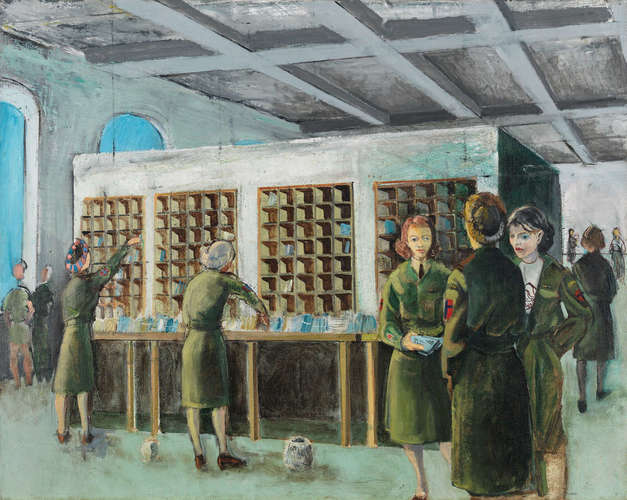
Molly Lamb, CWACs Sorting Mail, n.d.
Oil on canvas, 60 x 76.3 cm, Canadian War Museum, Ottawa
By focusing on the activities of the CWAC overseas, often in a humorous and positive sense, Lamb provides a rare look into the wartime activities of Canadian servicewomen. Her CWACs Sorting Mail, n.d., for example, illustrates activities performed by women far from the front lines that helped to maintain the war effort. Salmon in the Galley, 1944, and other commissioned works by Nicol MacLeod, serve the same purpose: as Nicol MacLeod explained, “Only if all the women painters in Canada were to cover all the activities of all the Women’s Divisions could this story ever be depicted properly.”
This Essay is excerpted from Molly Lamb Bobak: Life & Work by Michelle Gewurtz.
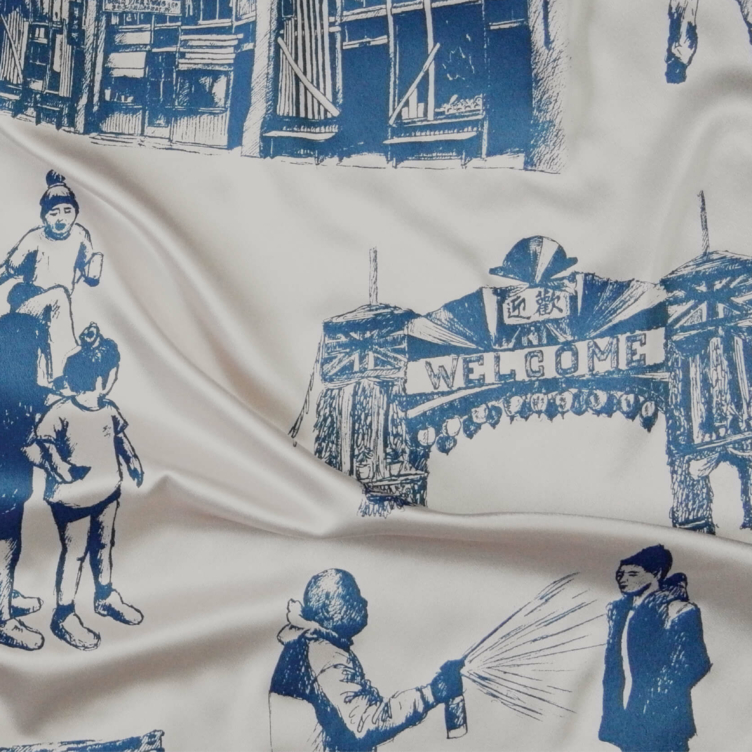 Karen Tam’s Autumn Tigers
Bridging Past and Present: Invisible Made Visible
By Imogene L. Lim, PhD
Karen Tam’s Autumn Tigers
Bridging Past and Present: Invisible Made Visible
By Imogene L. Lim, PhD
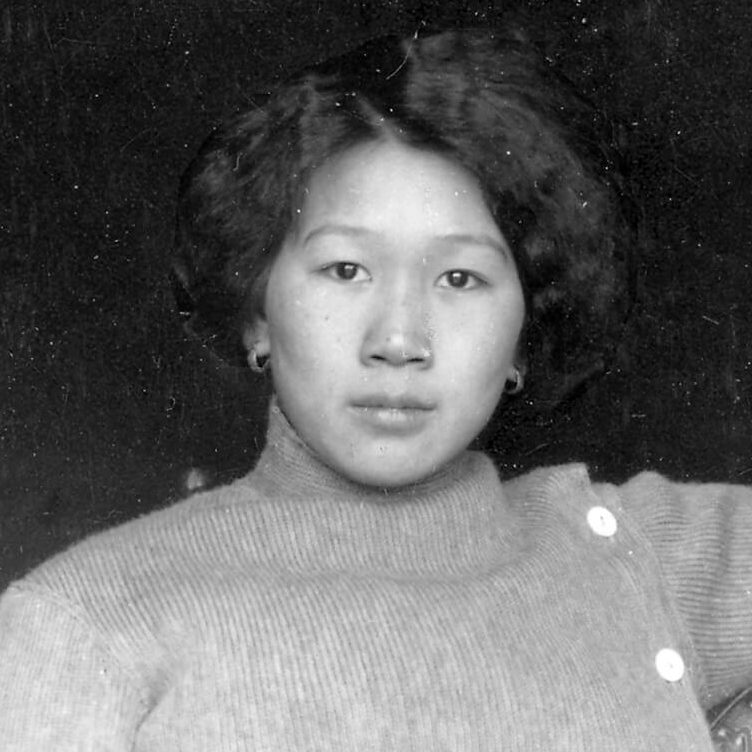 The Frontier Portraits of C.D. Hoy
A Chinese Canadian Photographer’s Tribute to His Community
By Faith Moosang
The Frontier Portraits of C.D. Hoy
A Chinese Canadian Photographer’s Tribute to His Community
By Faith Moosang
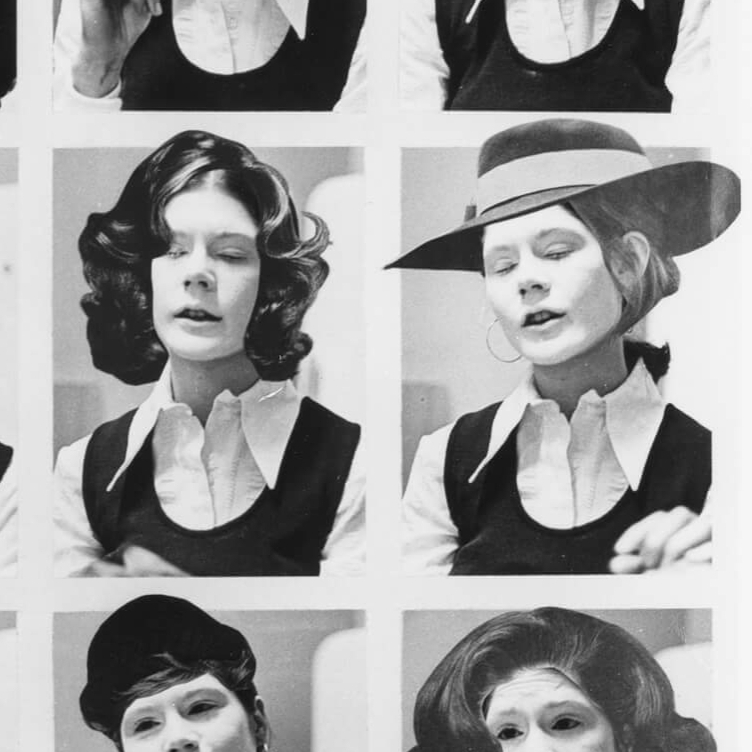 Interrogating Identity
Suzy Lake explores the role of photography in shaping how we understand and see ourselves
By Erin Silver
Interrogating Identity
Suzy Lake explores the role of photography in shaping how we understand and see ourselves
By Erin Silver
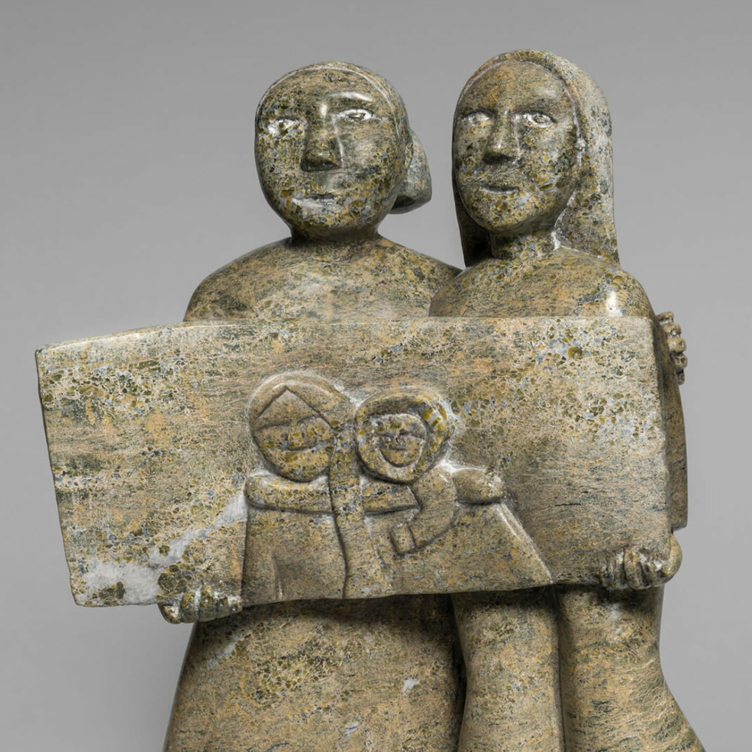 An Emboldened Artist
How Oviloo Tunnillie achieved rare international acclaim as an Inuit female sculptor
By Darlene Coward Wight
An Emboldened Artist
How Oviloo Tunnillie achieved rare international acclaim as an Inuit female sculptor
By Darlene Coward Wight
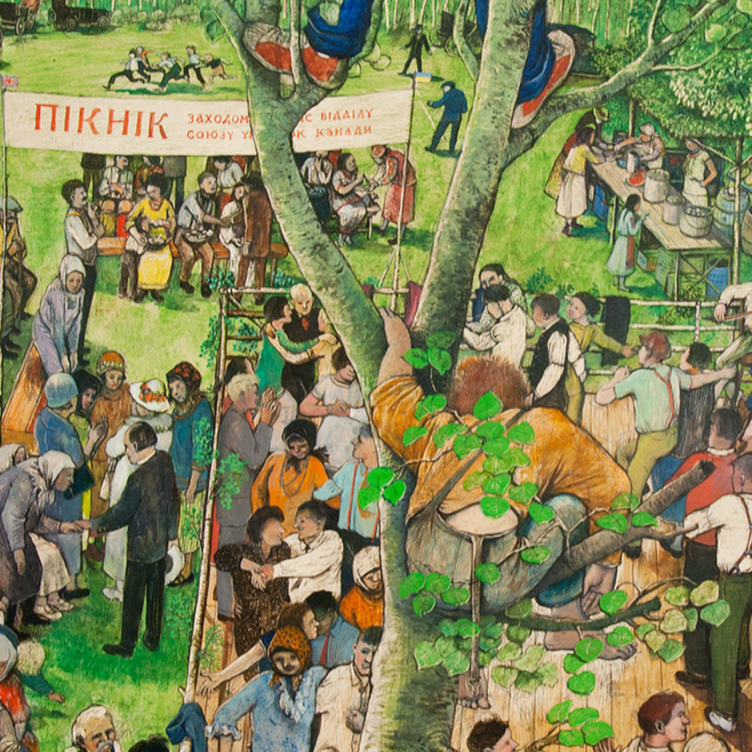 Painting the Cultural Mosaic
William Kurelek traversed the country in a quest to capture its diverse inhabitants
By Andrew Kear
Painting the Cultural Mosaic
William Kurelek traversed the country in a quest to capture its diverse inhabitants
By Andrew Kear
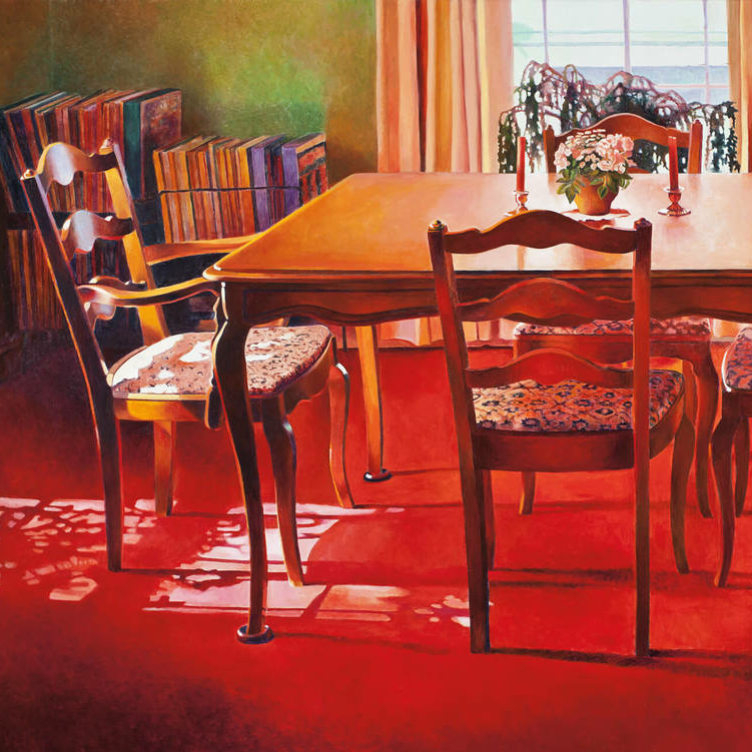 Domestic Discontent
Mary Pratt’s poetic scenes of home life are praised for their political edge
By Ray Cronin
Domestic Discontent
Mary Pratt’s poetic scenes of home life are praised for their political edge
By Ray Cronin
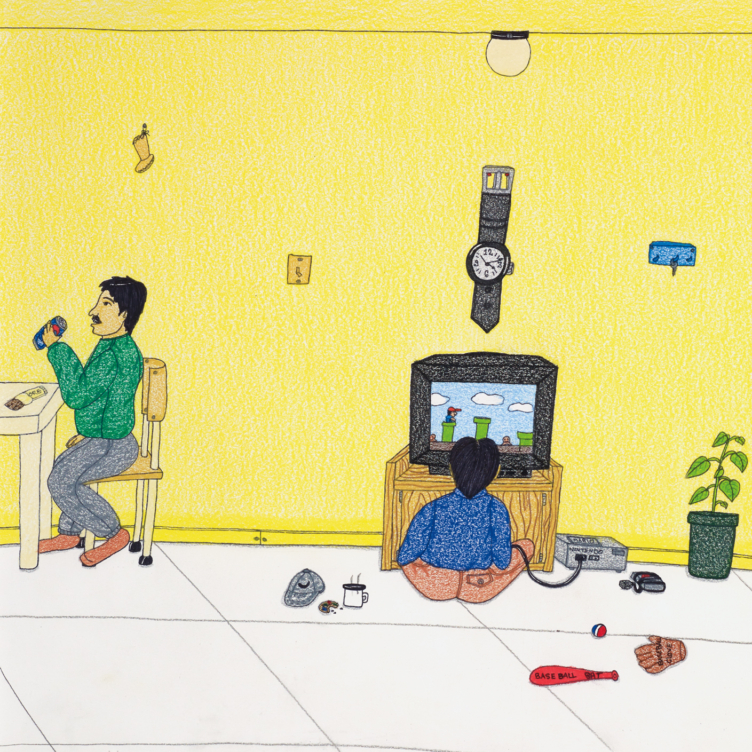 A New Vision of the North
Annie Pootoogook’s art offers unprecedented insights into the contemporary Arctic
By Nancy G. Campbell
A New Vision of the North
Annie Pootoogook’s art offers unprecedented insights into the contemporary Arctic
By Nancy G. Campbell
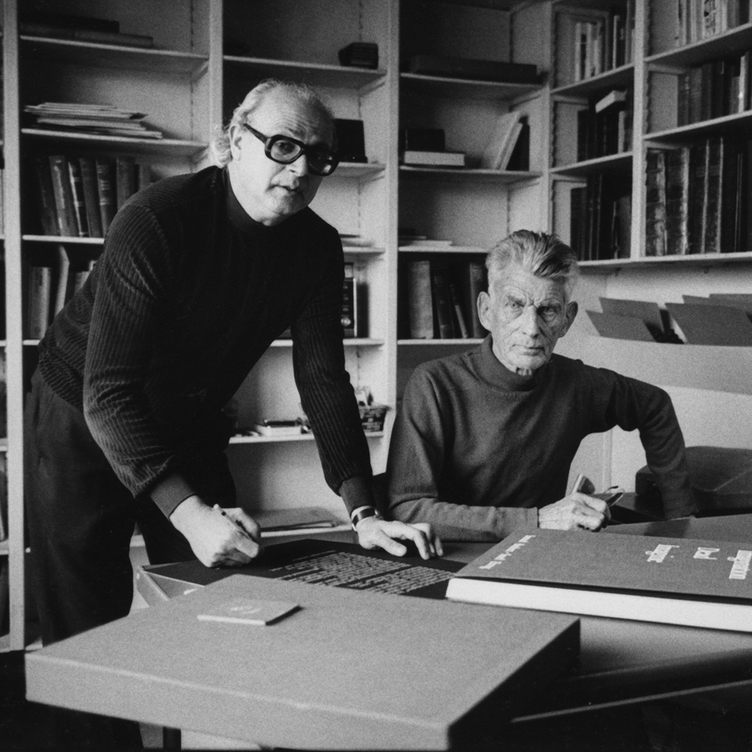 Meetings of Minds
Sorel Etrog found new ideas in collaborative work
By Alma Mikulinsky
Meetings of Minds
Sorel Etrog found new ideas in collaborative work
By Alma Mikulinsky
 Introducing Miss Chief
An excerpt from the ACI’s book “Revision and Resistance”
By Shirley Madill
Introducing Miss Chief
An excerpt from the ACI’s book “Revision and Resistance”
By Shirley Madill
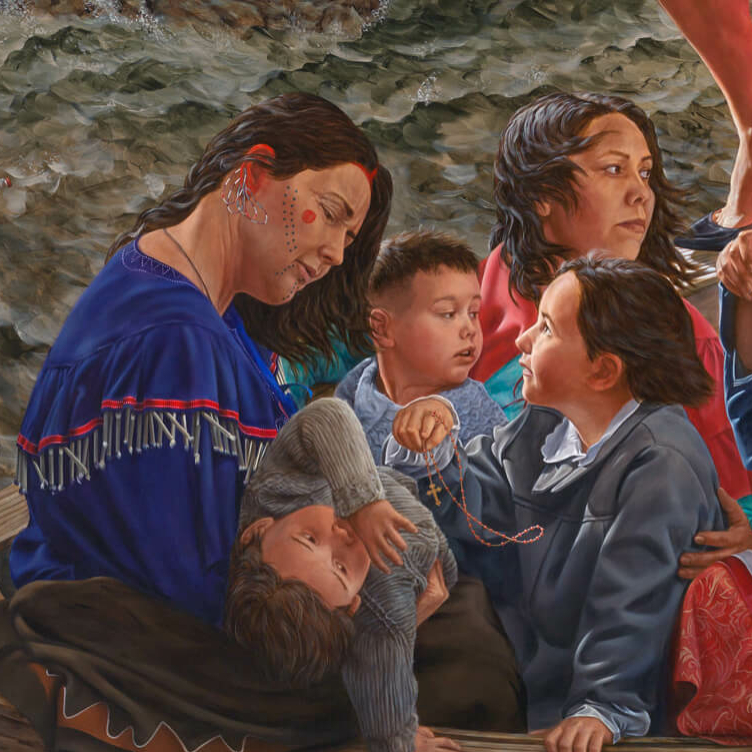 A Practice of Recovery
An excerpt from the ACI’s book “Revision and Resistance”
By Sasha Suda
A Practice of Recovery
An excerpt from the ACI’s book “Revision and Resistance”
By Sasha Suda
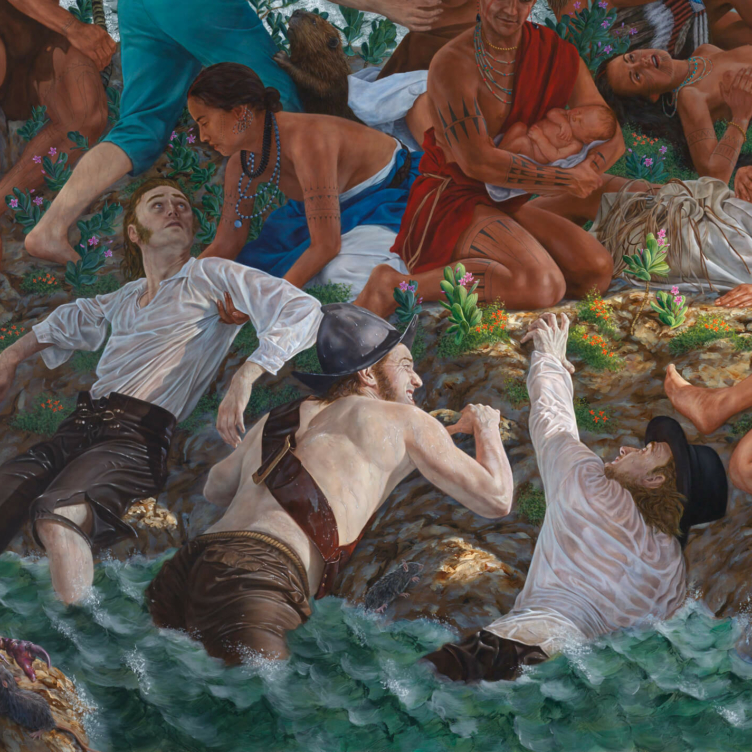 Decolonizing History Painting
An excerpt from the ACI’s book “Revision and Resistance”
By Ruth B. Phillips and Mark Salber Phillips
Decolonizing History Painting
An excerpt from the ACI’s book “Revision and Resistance”
By Ruth B. Phillips and Mark Salber Phillips
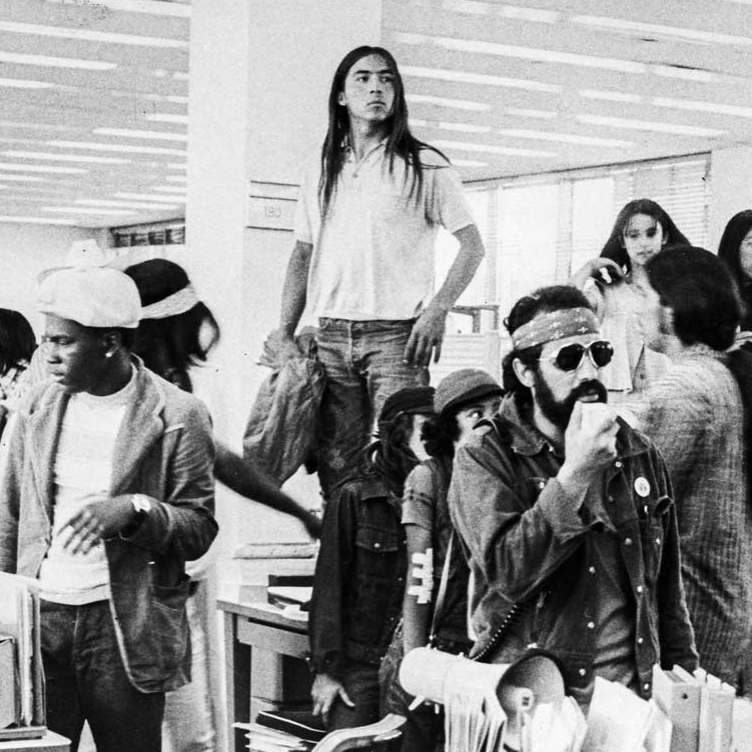 A Vision for the Future
An excerpt from the ACI’s book “Revision and Resistance”
By Nick Estes
A Vision for the Future
An excerpt from the ACI’s book “Revision and Resistance”
By Nick Estes
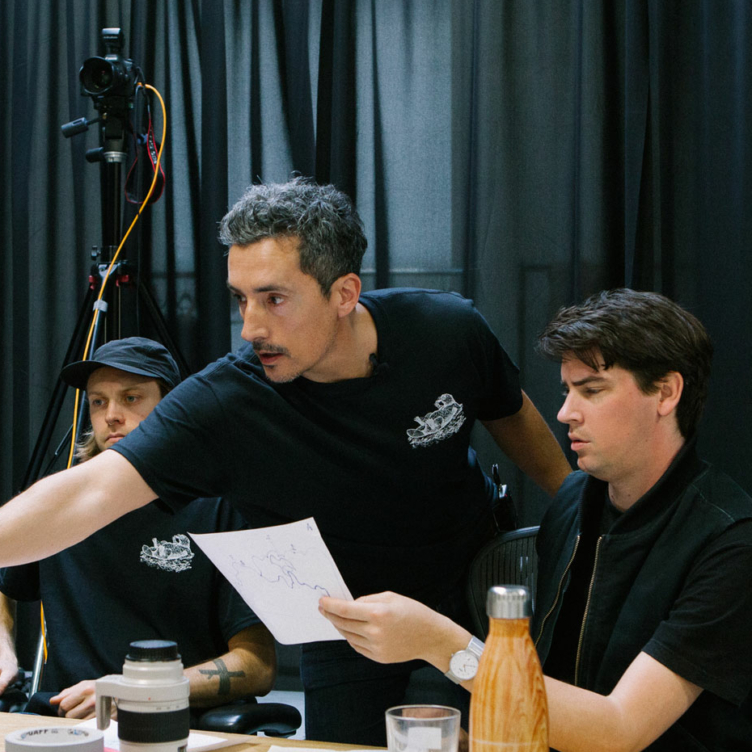 Inside Kent Monkman’s Studio
An excerpt from the ACI’s book “Revision and Resistance”
By Jami C. Powell
Inside Kent Monkman’s Studio
An excerpt from the ACI’s book “Revision and Resistance”
By Jami C. Powell
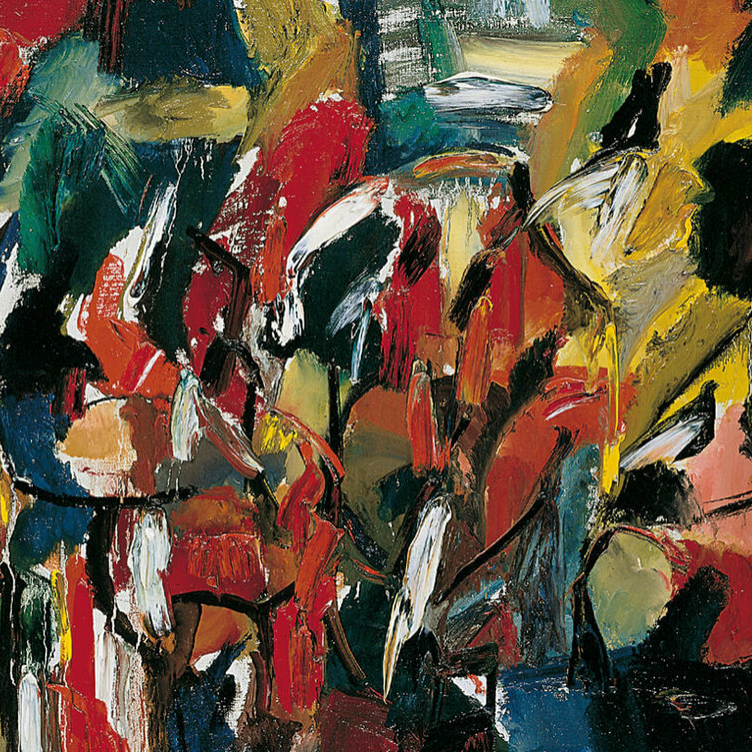 The Rule of Chance
Jean Paul Riopelle’s break with Automatism
By François-Marc Gagnon
The Rule of Chance
Jean Paul Riopelle’s break with Automatism
By François-Marc Gagnon
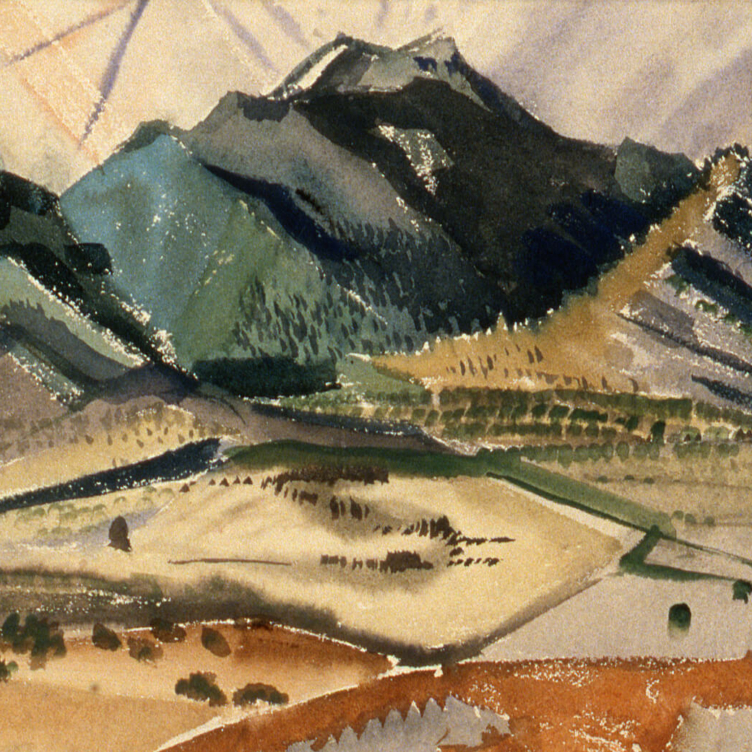 From Taos to New York
Agnes Martin and the currents of American Art
By Christopher Régimbal
From Taos to New York
Agnes Martin and the currents of American Art
By Christopher Régimbal
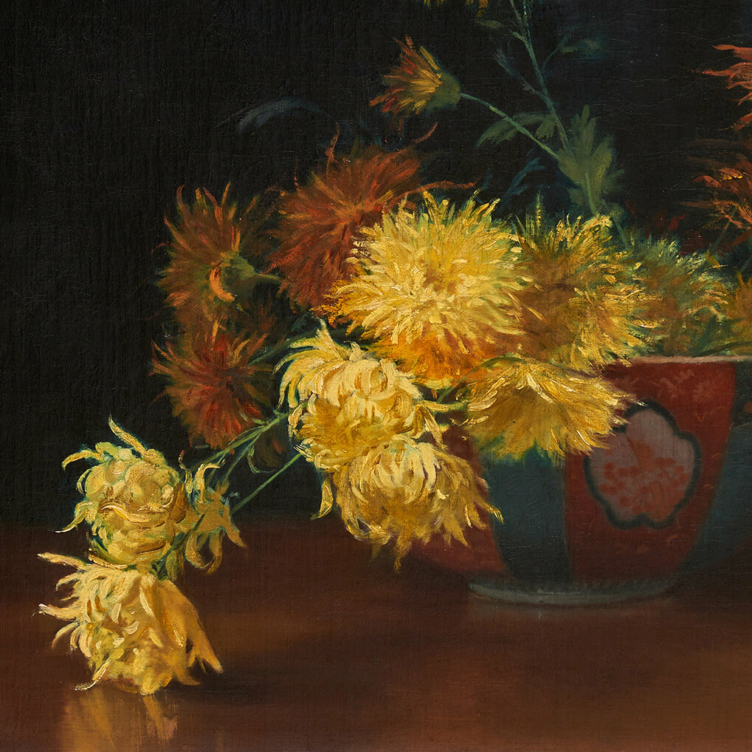 An Artist Blooms
Mary Hiester Reid’s floral aesthetics
By Andrea Terry
An Artist Blooms
Mary Hiester Reid’s floral aesthetics
By Andrea Terry
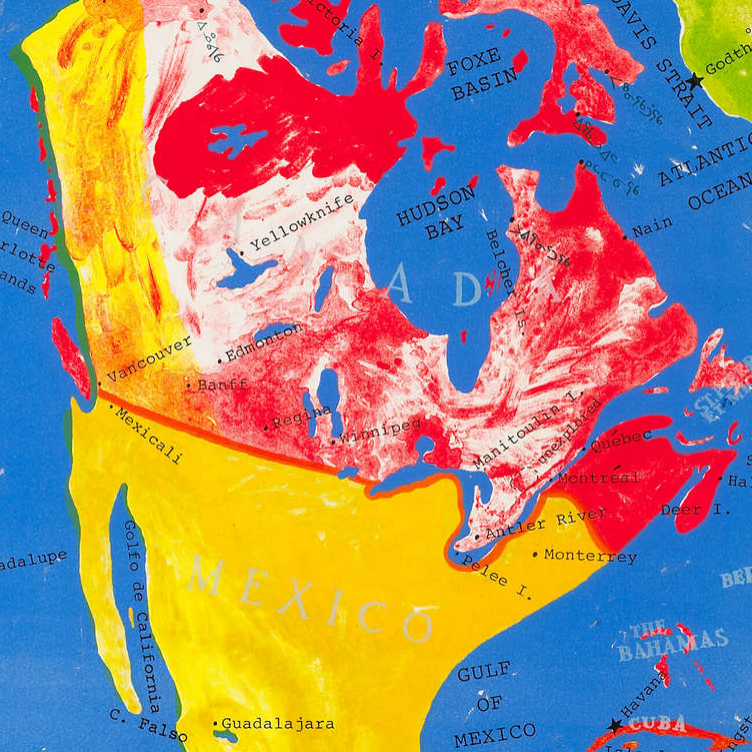 The Patriotic Painter
Greg Curnoe’s Canada
By Judith Rodger
The Patriotic Painter
Greg Curnoe’s Canada
By Judith Rodger
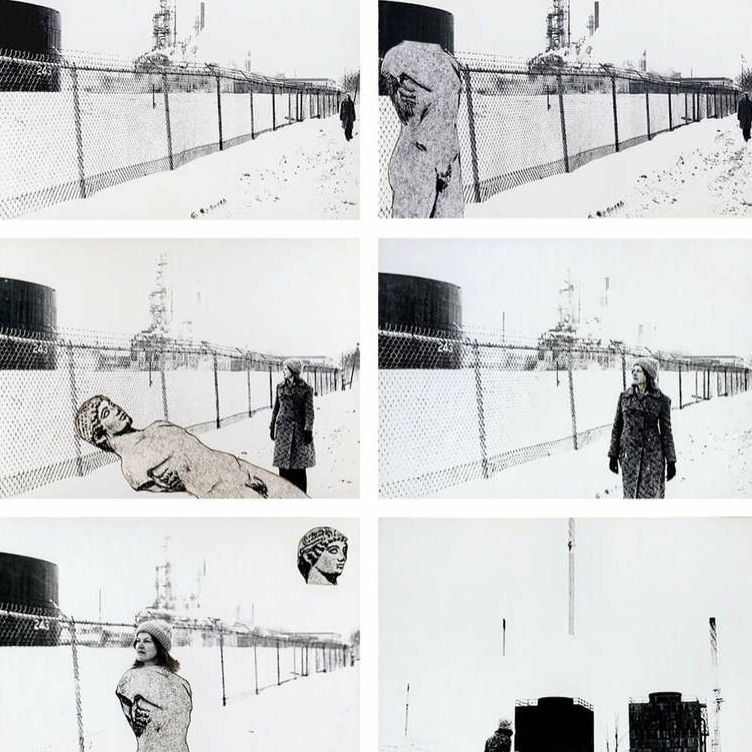 Walking, Stacking, Dancing
Françoise Sullivan’s conceptual 1970s
By Annie Gérin
Walking, Stacking, Dancing
Françoise Sullivan’s conceptual 1970s
By Annie Gérin
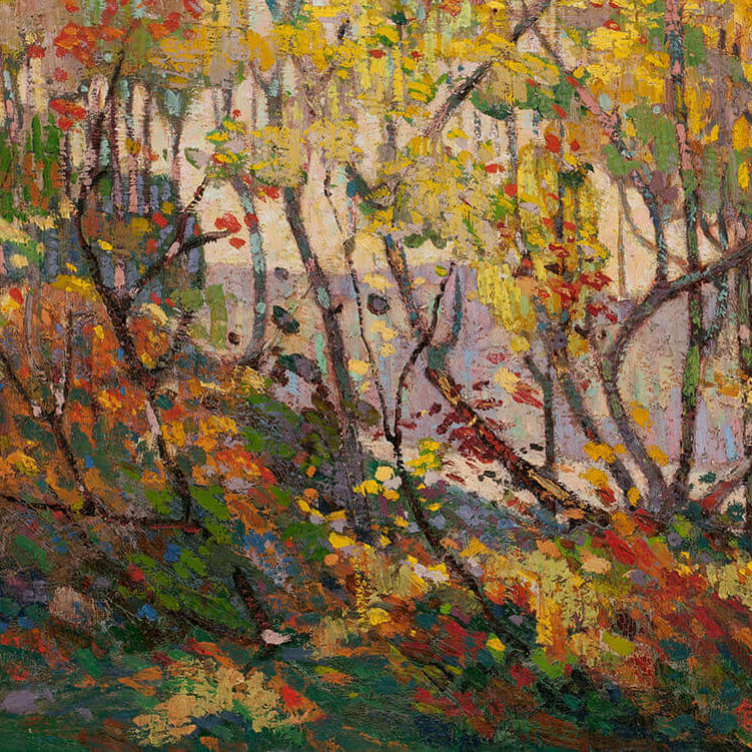 The Extraordinary North
Tom Thomson’s diary of landscape
By David P. Silcox
The Extraordinary North
Tom Thomson’s diary of landscape
By David P. Silcox
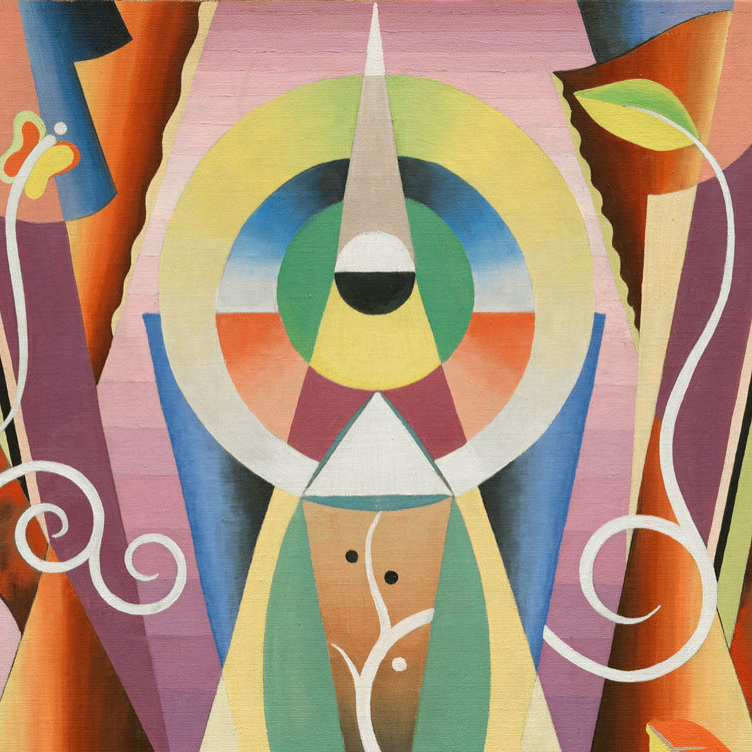 A Champion of Abstraction
Jock Macdonald sought a new expression in art
By Joyce Zemans
A Champion of Abstraction
Jock Macdonald sought a new expression in art
By Joyce Zemans